
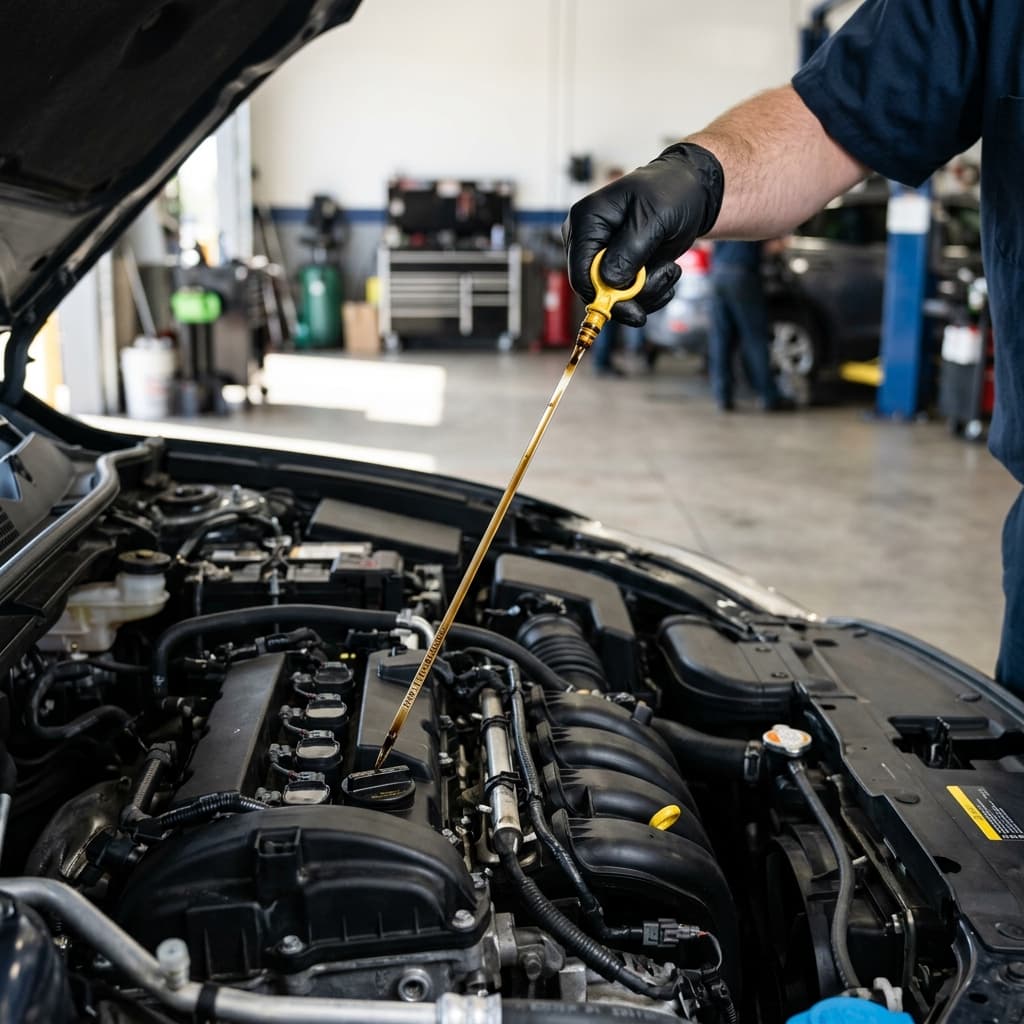
Your oil light illuminating on the dashboard is one of the most anxiety-inducing moments for any driver. The short answer: No, it is not safe to drive with your oil light on. This warning exists because your engine is actively being starved of lubrication, and damage can begin within minutes. Here's why it matters, what's causing it, and exactly what you should do.
What Does the Oil Light Mean?
The oil warning light indicates that your engine's oil pressure has dropped below a safe operating level. This is different from an oil *change* reminder — the oil pressure light means there's an active problem with oil flow in your engine right now. Your engine's internal components — crankshaft bearings, camshafts, pistons, and valve train — rely on a constant film of pressurized oil to prevent metal-on-metal contact. When that film disappears, friction and heat build rapidly.
Oil Pressure vs. Oil Level vs. Oil Change: Three Different Warnings
Modern vehicles can have up to three separate oil-related dashboard warnings, and confusing them can lead to either unnecessary panic or dangerous complacency:
- Oil pressure light (red, oil can icon): This is the emergency. Oil pressure is critically low *right now*. Pull over immediately. This light means your engine may already be taking damage.
- Low oil level warning (amber/yellow): Some newer vehicles have a separate sensor that detects when oil volume in the pan is low. This is serious but gives you slightly more time — you can carefully drive to a safe location to add oil, ideally within a mile or two.
- Oil change / maintenance reminder (wrench icon or text): This is a mileage- or time-based reminder that your oil is *due* for replacement. It's not an emergency. Schedule service within the next week or two.
The red oil pressure light is the one that demands immediate action. If you're unsure which light you're seeing, treat it as the worst case and pull over.
5 Reasons Your Oil Pressure Drops
Oil pressure can drop for several reasons, and each has a different repair path and cost:
1. Low Oil Level
The most common cause by far. Oil may have been burned off, leaked through a gasket or seal, or it's simply been too long since your last oil change. Repair cost: $0–$50 — adding oil yourself costs a few dollars; an oil change runs $30–$75 depending on oil type.
2. Oil Pump Failure
The oil pump is responsible for circulating oil under pressure throughout the engine. When it fails, pressure drops to zero regardless of how much oil is in the pan. Repair cost: $300–$800 for most vehicles, though some designs require significant labor to access the pump.
3. Clogged Oil Passages
Over time, sludge from degraded oil, carbon deposits, or debris can block the narrow passages that deliver oil to critical components. This is especially common in engines that have gone too long between oil changes or used the wrong oil weight. Repair cost: $200–$600 for an engine flush and cleaning, though severe sludge buildup can require partial disassembly.
4. Worn Engine Bearings
As engine bearings wear, the clearances between the bearing and shaft increase. This extra space allows oil to escape too easily, dropping overall system pressure. By the time bearings cause low pressure, the engine is typically in need of major work. Repair cost: $1,500–$4,000+ depending on how many bearings are affected and whether the crankshaft is damaged.
5. Faulty Oil Pressure Sensor
Sometimes the sensor or its wiring is the problem rather than the oil pressure itself. The sensor can corrode, short out, or simply wear out over time. Repair cost: $50–$150 for the sensor replacement — a relatively inexpensive fix for significant peace of mind.
How Long Can You Drive with the Oil Light On?
Ideally, zero additional miles. Engine damage from low oil pressure can begin within minutes. Metal-on-metal contact without lubrication causes rapid wear, scoring, and overheating that can destroy an engine.
If your oil light comes on while driving:
- Pull over safely as soon as possible
- Turn off the engine to stop further damage
- Check the oil level using the dipstick
- If oil is low, add oil if you have some available
- If oil level is fine, the issue is pressure-related — do not restart the engine. Call for a tow.
Can You Drive to the Shop?
This is the question we hear most often, and the honest answer depends on the situation:
- If you added oil and the light turned off: You can *carefully* drive to a shop, keeping it under 5 miles if possible. Avoid highways and high RPMs. If the light comes back on, pull over immediately.
- If the light is steady and the oil level is full: Do not drive. This indicates a pressure problem (pump, bearings, or blockage). Call for a tow.
- If the light flickers only at idle but goes off when driving: You likely have a marginal pressure issue. You can drive short distances at low speed, but get it diagnosed within 24 hours.
When in doubt, a $100 tow is always cheaper than a $5,000 engine.
What Happens Inside Your Engine Without Oil
Understanding what oil actually does helps explain why the consequences are so severe. Engine oil creates a thin pressurized film — just thousandths of an inch thick — between every moving metal surface inside your engine. When that film disappears:
- Bearing surfaces overheat and score: The soft bearing material begins to melt and smear, embedding metal particles into the oil (or what's left of it)
- Cylinder walls get scratched: Pistons expand from heat and scrape against the cylinder walls, leaving deep grooves that destroy the seal between the piston rings and cylinder
- The engine seizes: In the worst case, components weld themselves together from friction heat, and the engine locks up completely — often while you're driving
This process can begin in as little as 30 seconds to 2 minutes of running without adequate oil pressure. By the time you hear knocking or rattling, permanent damage has usually already occurred.
The Real Cost of Ignoring the Oil Light
The financial difference between responding immediately and "just driving a little further" can be staggering:
| Response | Typical Cost |
|---|---|
| Add oil / oil top-off | $0–$50 |
| Oil change + new filter | $30–$75 |
| Oil pressure sensor replacement | $50–$150 |
| Oil pump replacement | $300–$800 |
| Engine bearing repair | $1,500–$4,000 |
| Complete engine replacement | $3,000–$10,000+ |
The pattern is clear: every mile you drive with the oil light on moves you further down this cost ladder. A $50 problem becomes a $5,000 problem in minutes, not days.
Common Oil Light Scenarios
Oil Light Flickering at Idle
If your oil light flickers or comes on briefly when you're stopped at a red light but turns off when you rev the engine or start moving, you likely have marginally low oil pressure at idle RPM. This usually means the oil level is a quart or more low, the oil pump pickup tube is partially clogged, or the pump is starting to wear. It's not an immediate emergency, but it needs attention within a day or two — the flickering will eventually become a steady light.
Oil Light On After an Oil Change
If your oil light comes on shortly after an oil change, the most likely causes are: the wrong oil viscosity was used (too thin for your engine), the oil filter is loose or defective (creating a pressure leak), or the oil level is underfilled. Occasionally, an oil change can dislodge sludge that then blocks a passage. Return to the shop that performed the change — any reputable shop will recheck their work at no charge.
Oil Light On When Braking or Turning
If the light comes on during hard braking or sharp turns but goes off on straight, level roads, your oil level is low enough that the oil sloshes away from the pump pickup tube during those maneuvers. This is a clear sign you need to add oil right away. Check the dipstick — you're likely at least a quart low.
How to Tell If Your Oil Pressure Sensor Is Faulty
A faulty sensor is actually the best-case scenario when your oil light comes on. Here are signs the sensor itself may be the problem rather than actual low pressure:
- The light comes on but the engine sounds completely normal — no ticking, knocking, or rattling
- The light behavior is erratic — flickering randomly without correlation to RPM, temperature, or driving conditions
- The light came on suddenly after hitting a pothole or speed bump (vibration can jar a failing sensor)
- Oil level and condition are confirmed good on the dipstick
Even if you suspect a bad sensor, always verify oil level first. A mechanic can connect a manual oil pressure gauge to the engine to test actual pressure — this takes about 15 minutes and gives a definitive answer.
Should You Check Oil Hot or Cold?
For the most accurate reading, check your oil when the engine is warm but has been off for 5–10 minutes. This allows oil to drain back into the pan while still at operating temperature. Cold readings can appear artificially high. For a deeper dive on this topic, see our guide on checking oil hot vs. cold.
What the Oil Change Light Means (Different!)
Many modern vehicles have a separate "Change Engine Oil Soon" or "Oil Maintenance Required" indicator. This is a reminder based on mileage or driving conditions — it's not an emergency. You can drive to your next convenient service appointment, but don't postpone it indefinitely. Driving thousands of miles past your oil change interval degrades the oil to the point where it can't protect your engine properly, and that's when sludge buildup and accelerated wear begin.
Frequently Asked Questions
Can low oil cause the check engine light to come on?
Yes. While the check engine light doesn't monitor oil level directly, low oil can trigger it indirectly. Low oil causes increased friction and heat, which can lead to misfires, timing chain stretch, or variable valve timing (VVT) malfunctions — all of which set check engine codes. If both your oil light and check engine light are on, address the oil issue first.
Why does my oil light come on when I brake?
Your oil level is likely low. During hard braking, oil surges toward the front of the oil pan, temporarily uncovering the oil pump pickup tube at the rear. The pump momentarily sucks air instead of oil, pressure drops, and the light activates. Top off your oil immediately and check for leaks.
My oil light came on then went off — should I worry?
Yes, you should investigate. A momentary oil light means pressure briefly dropped below the safe threshold. Common causes include a low oil level right at the borderline, a sensor glitch, or a pump that's starting to weaken. Check your oil level as soon as possible. If the level is good, have the pressure tested at a shop within the week.
How long can an engine run without oil?
Most engines will suffer irreversible damage within 5–10 minutes of running with no oil at all. With *low* oil (rather than no oil), you might get slightly longer, but bearing damage and cylinder scoring can begin in under 2 minutes at highway RPM. There is no safe amount of time to run an engine without adequate oil pressure.
If your oil light came on, is flickering, or you're unsure about your oil condition, visit any Chloe's Auto Repair & Tire location for a free oil pressure check. We'll verify your oil level, test actual pressure with a gauge if needed, and let you know exactly what's going on — no appointment necessary. And if you're overdue for an oil change, our complete guide to oil change intervals and service types explains exactly what's included and when you need one.