
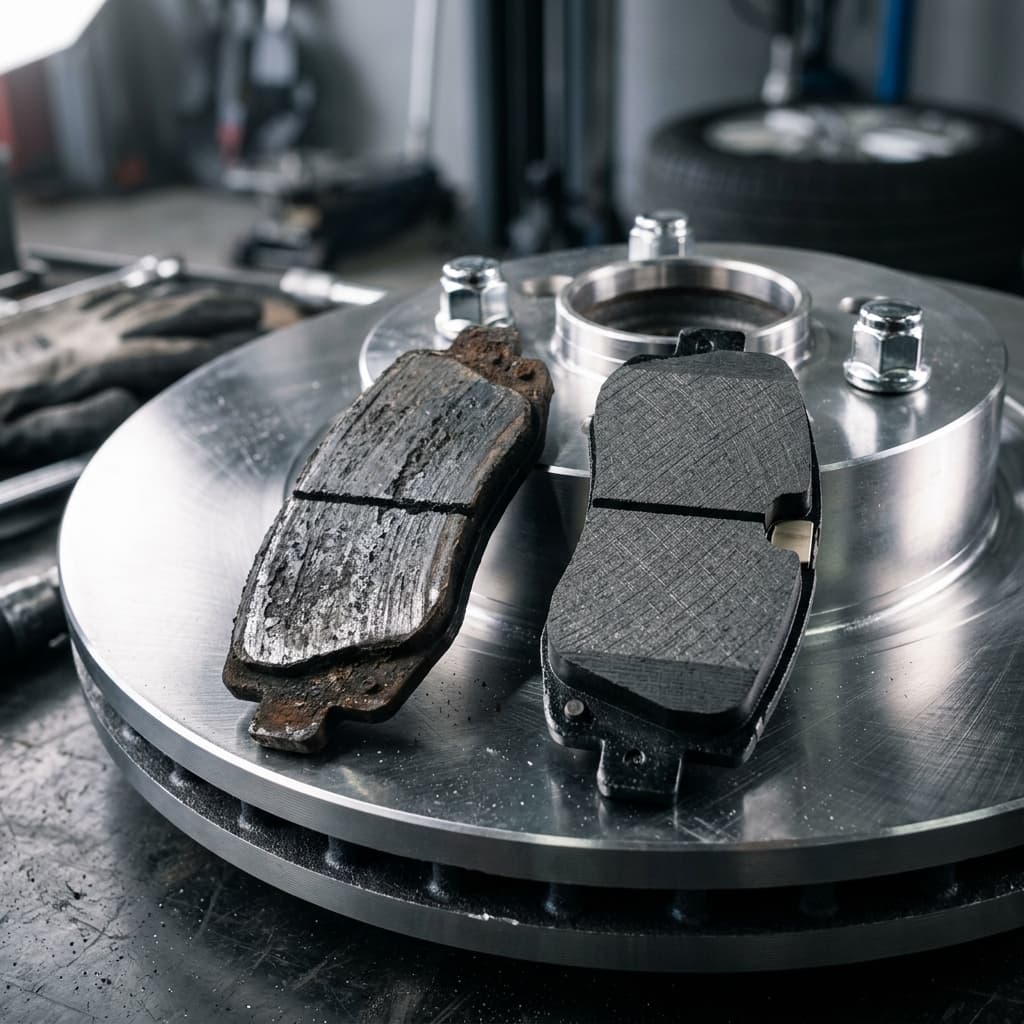
Brake noises are your vehicle's built-in warning system. Some sounds are completely normal; others are urgent. The key is knowing which is which — because ignoring the wrong noise can turn a $200 brake job into a $700+ rotor replacement, or worse, put you in a dangerous situation. Here's a complete breakdown of every brake noise you might hear and exactly what it means.
1. Squealing (High-Pitched Squeal When Braking)
Squealing is the most common brake noise, and it has several possible causes:
Worn pad wear indicators: This is the most important one. Most modern brake pads have a small metal tab attached to the backing plate specifically designed to contact the rotor when the pad reaches minimum thickness. That contact creates the high-pitched squeal you hear — by design. It's a built-in alarm telling you the pads are due for replacement. At this point, you have some time to schedule service but shouldn't delay.
Morning moisture: A thin layer of surface rust forms on rotors overnight (especially after rain). The first few stops of the day scrub this off, creating a brief squeal or scraping sound that disappears within a block. This is completely normal and requires no repair.
Glazed pads or rotors: Repeated overheating or riding the brakes can harden the pad surface and leave a glassy layer on the rotor. Glazed contact surfaces generate high-frequency noise. This often requires cleaning or replacing the affected components.
Dust and debris: Fine dust between the pad and rotor — common after driving on dirt roads — can cause temporary squealing that clears on its own.
Pad material composition: Semi-metallic brake pads, which are common on trucks and performance vehicles, are inherently noisier than ceramic pads, especially when cold.
*Typical fix cost: $150–$300 per axle for pad replacement.*
2. Grinding (Metal-on-Metal Scraping)
Grinding is the most serious brake noise. If you hear this, treat it as an emergency.
Pads worn completely through: When brake pads wear past the metal wear indicator and the friction material is entirely gone, the metal backing plate of the pad grinds directly against the rotor. This is loud, unmistakable, and causes rapid damage to the rotor surface. It also dramatically reduces your braking effectiveness — you can feel it as reduced stopping power.
Every mile you drive with grinding brakes risks turning a pad replacement into a full pad-and-rotor replacement — roughly doubling the cost. At Chloe's, we often see rotors that are deeply scored from customers who drove on metal-to-metal contact for weeks.
Debris caught in the caliper: A stone or piece of road debris can wedge between the brake pad and rotor. This often creates a loud scraping or grinding noise that may stop after a few hard stops — or may persist. If a debris grind clears within a mile, you're probably fine. If it persists, get it inspected.
Broken pad: In rare cases, a brake pad can fracture and separate from its backing plate, creating grinding from an irregular piece of material.
*⚠ Stop driving immediately if grinding persists. Typical fix cost: $300–$600 per axle for pads and rotors.*
3. Clicking or Rattling (When Braking or Releasing)
A clicking or rattling sound when you apply or release the brakes is almost always a hardware issue rather than a pad or rotor issue:
Loose anti-rattle clips or caliper hardware: Brake calipers are held in place by mounting hardware that also controls noise. Anti-rattle clips, shims, and caliper bolts that become corroded, loose, or missing allow the caliper or pad to rattle against the bracket — creating a distinctive metal clicking or rattling noise.
Loose heat shield: A loose or corroded heat shield on the brake rotor or exhaust system can rattle with every application of the brakes.
Missing brake pad shims: Shims are thin layers between the pad backing plate and caliper piston that dampen vibration and noise. When shims are missing (common after low-quality brake jobs), rattling and noise increase.
*Typical fix cost: $50–$150 for hardware replacement, often done during a pad replacement.*
4. Scraping (Continuous Scraping While Driving)
A continuous scraping sound that's present even when you're not braking is usually caused by debris lodged between the pad and rotor, or by a dragging brake. Rocks, gravel, and other road debris can wedge into the tight gap of your brake assembly.
In most cases, the debris works its way out on its own after a few miles. If the scraping persists or is accompanied by pulling to one side, get it inspected — a stuck caliper or sticking pad can cause continuous drag, accelerate pad wear, and create dangerous heat.
*Typical fix cost: $0 if debris clears itself; $200–$400 if a sticking caliper needs service.*
5. Clunking When Braking
A deep clunk or thud when you apply the brakes — especially when transitioning from acceleration to braking — points to loose mechanical components:
Loose caliper: A caliper whose mounting bolts have loosened can shift when brake force is applied, creating a clunking sound. This is a safety issue — a caliper that comes free completely can cause a catastrophic brake failure.
Worn brake hardware or mounting brackets: The anti-rattle hardware and caliper brackets that keep everything secure wear over time. Play in these components creates clunking under braking loads.
Loose wheel bearing or rotor: In some cases, a worn wheel bearing allows the rotor to wobble, creating clunks under braking.
*Typical fix cost: $100–$400 depending on the cause.*
6. Groaning (Low-Pitched Moan When Stopping)
A groaning or moaning sound — particularly at slow speeds when coming to a final stop — is often caused by:
Sticking caliper: A caliper whose slider pins are corroded or seized doesn't retract properly when you release the brakes. This causes the pad to drag on the rotor and creates a groaning sound under both light braking and release.
Corroded caliper slide pins: Slide pins allow the caliper to float and apply even pressure across the pad. When these corrode, the caliper binds and grinds unevenly against the rotor, causing groaning.
A sticking caliper wastes fuel (because the brake drags constantly), causes uneven pad wear, and will eventually cause one side to wear out much faster than the other.
*Typical fix cost: $150–$350 to service or replace a caliper.*
When Is It Safe to Keep Driving vs. When to Stop Immediately?
| Noise | Safe to Drive? |
|---|---|
| Morning squeal that disappears | ✅ Normal |
| Intermittent squeal (wear indicators) | ⚠ Schedule service within 1–2 weeks |
| Persistent squealing for days | ⚠ Inspect soon — pads likely thin |
| Grinding metal-on-metal | 🚨 Stop driving — immediate service |
| Clicking/rattling hardware | ⚠ Safe for now; inspect at next service |
| Clunking under braking | 🚨 Loose component — inspect immediately |
| Persistent scraping while driving | ⚠ Inspect if doesn't clear within a few miles |
Frequently Asked Questions
Why do my brakes squeal in the morning?
Morning squeal is almost always caused by surface rust on the rotors. Rotors are bare iron and form a light rust layer overnight — especially in humidity or after rain. The first few brake applications scrub this rust off, creating a brief squealing or scraping noise. If the noise disappears after a block or two, your brakes are fine.
Is brake grinding an emergency?
Yes. Metal-on-metal grinding means your brake pads are completely worn and the steel backing plate is in direct contact with your rotor. Every stop damages the rotor further and reduces your braking effectiveness. Pull over and call for service if the grinding is persistent. If your grinding is accompanied by pedal vibration, you may also need to read our guide on what causes rotors to warp.
Why do my brakes make noise after new pads?
Some noise after new pad installation is normal during the first 50–100 miles of "bedding in" (the process of transferring a thin layer of pad material evenly onto the rotor). Light squealing during this period is expected. If the noise persists beyond 150 miles or sounds like grinding, the pads may not have been installed correctly — or the wrong pad type was used.
How much does brake noise repair cost?
It depends entirely on the cause. Worn pads are typically $150–$300 per axle. If rotors are also damaged, add $60–$160 for replacement rotors. Caliper service or replacement runs $150–$350. Hardware issues are the cheapest at $50–$150. The diagnostic inspection is the essential first step to knowing exactly what you're dealing with.
If your brakes are making any persistent noise, visit any Chloe's Auto Repair & Tire location for a complimentary brake inspection. We'll tell you exactly what's causing the noise, show you the worn components, and give you an honest estimate — no pressure, no upsells.