
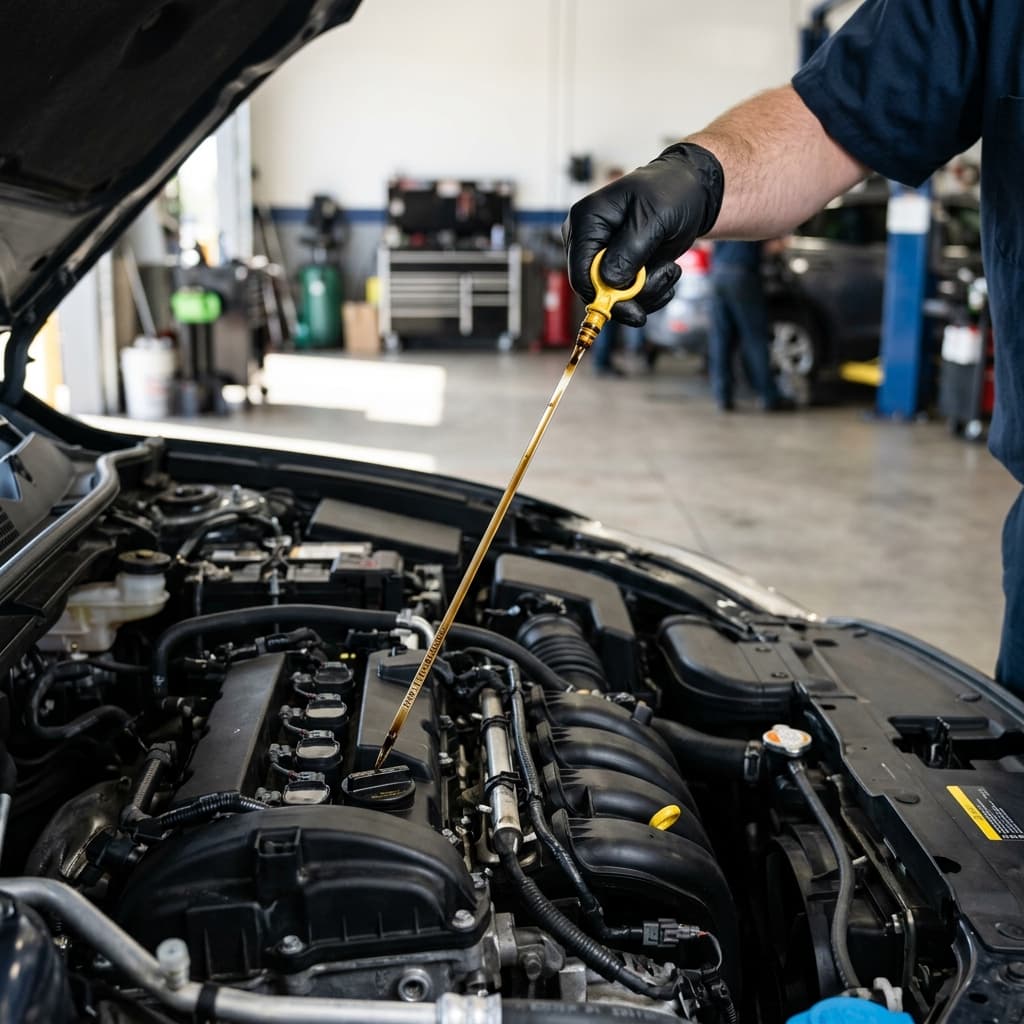
It's one of the most common car maintenance questions: should you check your oil when the engine is hot or cold? The short answer is that both methods work, but the best approach depends on your vehicle and your routine. Here's everything you need to know for an accurate reading.
The Quick Answer
For most drivers, checking oil first thing in the morning (cold) is the easiest and most consistent method. All oil has drained into the pan overnight, so you get a full, accurate reading every time. However, many manufacturers recommend checking at operating temperature — so always check your owner's manual first.
Checking Oil Cold (Engine Off Overnight)
How to do it:
- Park on level ground
- Wait until the engine has been off for several hours (or check first thing in the morning)
- Pull the dipstick, wipe clean, reinsert fully, then pull again
- Read the level between the min and max marks
Pros:
- Most consistent: All oil has settled in the pan, giving a complete reading
- Safest: No risk of burns from hot engine components
- No waiting: Just pop the hood and check
Cons:
- Cold oil is thicker and may read slightly higher on the dipstick
- Some vehicles' dipsticks are calibrated for warm oil readings
Checking Oil Warm (After Driving)
How to do it:
- Drive until the engine reaches normal operating temperature
- Park on level ground and turn off the engine
- Wait 5–10 minutes for oil to drain back into the pan
- Pull the dipstick, wipe, reinsert, and read
Pros:
- Warm oil flows easily and drains back quickly
- Many manufacturers calibrate dipsticks for warm oil readings
- Catches issues like oil burning that show up at operating temperature
Cons:
- You must wait the full 5–10 minutes — checking immediately will show a falsely low level
- Hot engine components can cause burns if you're not careful
The Most Important Rule: Be Consistent
Whether you choose hot or cold, always check the same way. This lets you establish a baseline for what "normal" looks like on your dipstick. If you always check cold and the level is consistently between the marks, you'll immediately notice if something changes.
How Often Should You Check Your Oil?
We recommend checking your oil level at least once a month, or before any long road trips. Even newer vehicles that track oil life digitally benefit from a manual dipstick check — sensors can fail, and nothing beats seeing it with your own eyes.
What to Look For Beyond the Level
While you have the dipstick out, pay attention to:
- Color: Fresh oil is amber or light brown. Dark brown or black oil is overdue for a change.
- Consistency: Oil should feel smooth between your fingers. Gritty oil indicates contamination.
- Milky appearance: A milky, frothy appearance on the dipstick can indicate coolant mixing with oil — this is a serious sign of a head gasket issue.
- Metal particles: Shiny metallic flecks in the oil suggest internal engine wear.
When Your Oil Level Changes Unexpectedly
If your oil level drops significantly between changes, you may have:
- An external oil leak (check under the car for spots)
- Oil burning internally (look for blue smoke from the exhaust)
- A worn PCV valve causing excessive oil consumption
At Chloe's Auto Repair & Tire, we check your oil as part of every service visit. If you're concerned about oil consumption or unsure whether your readings are accurate, visit any of our five locations — we're happy to show you the right technique for your specific vehicle.