
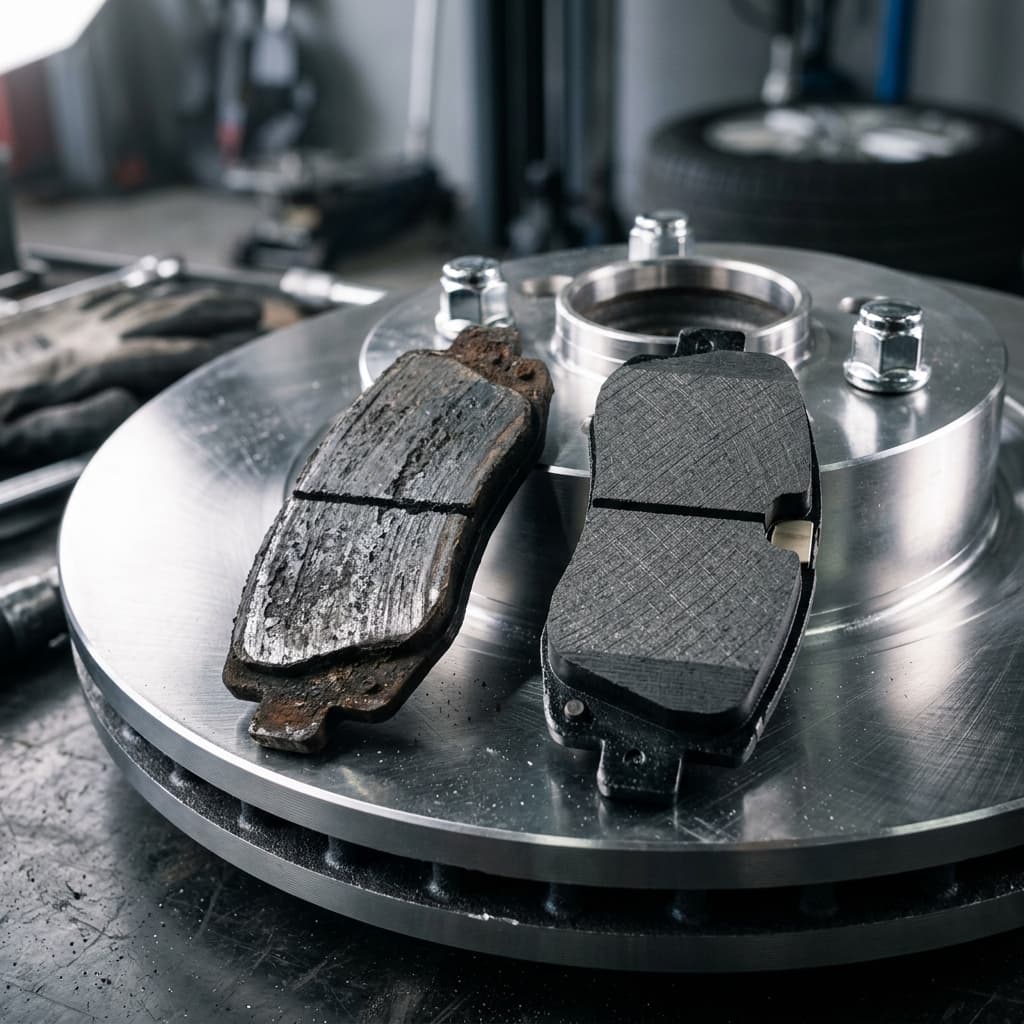
That high-pitched squeal when you ease into a stop is easy to shrug off. Traffic is loud. Maybe the rotors are just damp. Then the sound gets sharper, the pedal feels a little soft, and you start braking earlier than you used to. Your brakes are not being dramatic. They are sending a message. Catching it early is how a small repair stays small.
Why these warnings matter
Brakes turn speed into heat and friction, thousands of times a year. When something in that system wears out, the car may not stop the way you expect. A warning you hear, feel, see, or smell is your chance to sort a small issue before it turns into a bigger job.
At Chloe's Auto Repair and Tire, we hear the same stories from drivers who come through the shop. Plenty of people wait because the car still slows down. Waiting makes sense only when the warning is mild and the pedal still feels trustworthy. Some signs mean book soon. Others mean tow.
What a normal stop can hide
Pads can be thin. Fluid can be old and full of moisture. A caliper can be sticking on one side. The car may feel fine on a quiet street and still be telling you something changed. If the sound, the pedal, or the pull is new, treat that change as real.
7 warning signs, and whether to book soon or tow
1. Squealing or chirping
A light squeal on the first stop of the morning can be surface rust or moisture. A squeal every time you brake is different. Many pads have a small metal wear indicator that sings when the friction material is getting thin. That noise is a reminder to book soon, not a reason to wait it out. Keep driving on it and the indicator, then the pad backing, can start cutting into the rotor.
Book soon if the squeal shows up on normal stops and the pedal still feels firm. You are usually still in pad territory. Catching it now often keeps the rotors in better shape.
2. Grinding
Grinding is past the warning stage. It usually means pad material is gone and metal is meeting metal. Every stop takes rotor surface you cannot put back. The sound may quiet down for a bit as the rotor wears smoother, which fools people into thinking it fixed itself. It did not.
Do not keep commuting on a grind until it is convenient. Book the soonest opening you can get. If the grind is loud, the pedal is changing, or stopping feels weak, have it towed. Driving on metal to metal can cook rotors and damage calipers.
3. The car pulls to one side
If the wheel tugs left or right when you brake, one side is working harder than the other. A stuck caliper, a collapsed brake hose, or uneven pad wear can do that. Alignment and tires can pull too, but a pull that shows up mainly under braking belongs in the brake bay.
Book soon if the tug is mild and the pedal still feels firm. If the car darts hard under braking, or you cannot hold a straight line, do not keep driving it. That is a tow.
4. A soft or sinking pedal
The pedal should feel firm and stop in about the same place every time. If it feels spongy, travels farther than usual, or slowly sinks while you hold it at a light, do not wait. Air in the lines, a fluid leak, a failing master cylinder, or boiled fluid after hard use can all cause that feel. Low fluid in the reservoir is a clue, not a top-off project. Something used that fluid.
This is not a next oil change item. If the pedal is soft, sinking, or going toward the floor, have the car towed. You want a shop to find out what is left, not the next intersection.
5. Vibration or pulsation
A shake in the steering wheel or a pulse in the pedal when you brake often points to rotor thickness variation. Heat, worn pads, or a caliper that does not release fully can leave high and low spots. The pedal chatters because the pad is riding an uneven surface.
A light pulse on harder stops is a book soon issue. Get it checked before pads and rotors wear each other worse. If the shake is violent, or it comes with a pull, a soft pedal, or a hot smell, stop driving and tow it.
6. A brake warning light
That red brake lamp is not a suggestion from the dashboard. It can mean the parking brake is on, fluid is low, or the system has a hydraulic fault. An amber ABS light is separate. It means the anti-lock system may not help you in a hard stop, even if the regular brakes still work. Either light deserves a scan and a visual check, not a piece of tape over the lens.
If the red brake light is on and the pedal still feels normal, book the same day. Drive gently only if you are sure the parking brake is released and the pedal is firm. If the light is on and the pedal is soft, the fluid is low, or the car pulls, tow it. An amber ABS light by itself, with normal braking feel, can usually wait for a near-term appointment. Do not ignore it. That light means the extra help you count on in a hard stop may not be there.
7. A burning smell after a drive
A sharp, chemical, hot smell after braking, especially with a wheel that feels unusually warm, often means a caliper is dragging. The pad stays pressed against the rotor. Heat builds. In a bad case, that heat can damage the wheel bearing, the rotor, and nearby rubber parts. A dragging brake can cook parts on a short trip.
Pull over if you smell brakes cooking or a wheel is too hot to be near. Let it cool. Have it towed if the smell is strong, you see smoke, or the car still drags. A faint hot smell after a long downhill, with no pull and a normal pedal, is still worth a soon appointment so a sticky caliper does not turn into a bigger repair.
Book soon or tow
Book soon, and drive easy until then, when you have a steady squeal, a mild pull, light pedal pulsation, or an ABS light with brakes that still feel normal. Those are warnings. They tend to get worse if you wait, and the car is usually still stoppable while you get it in.
Tow it if the pedal is soft or sinking, you are grinding metal, the car pulls hard, a wheel is burning hot, or you do not trust the next stop. Waiting on those is how a pad check can grow into rotors and calipers.
A proper brake check looks at pad thickness, rotor condition, caliper movement, hoses, fluid level and condition, and warning lights. We explain what we find in plain language before any work starts.
If your brakes are already talking, schedule brake repair. We will sort squeal from grind, soft pedal from normal feel, and walk you through what the check shows before anyone talks about the next step.