
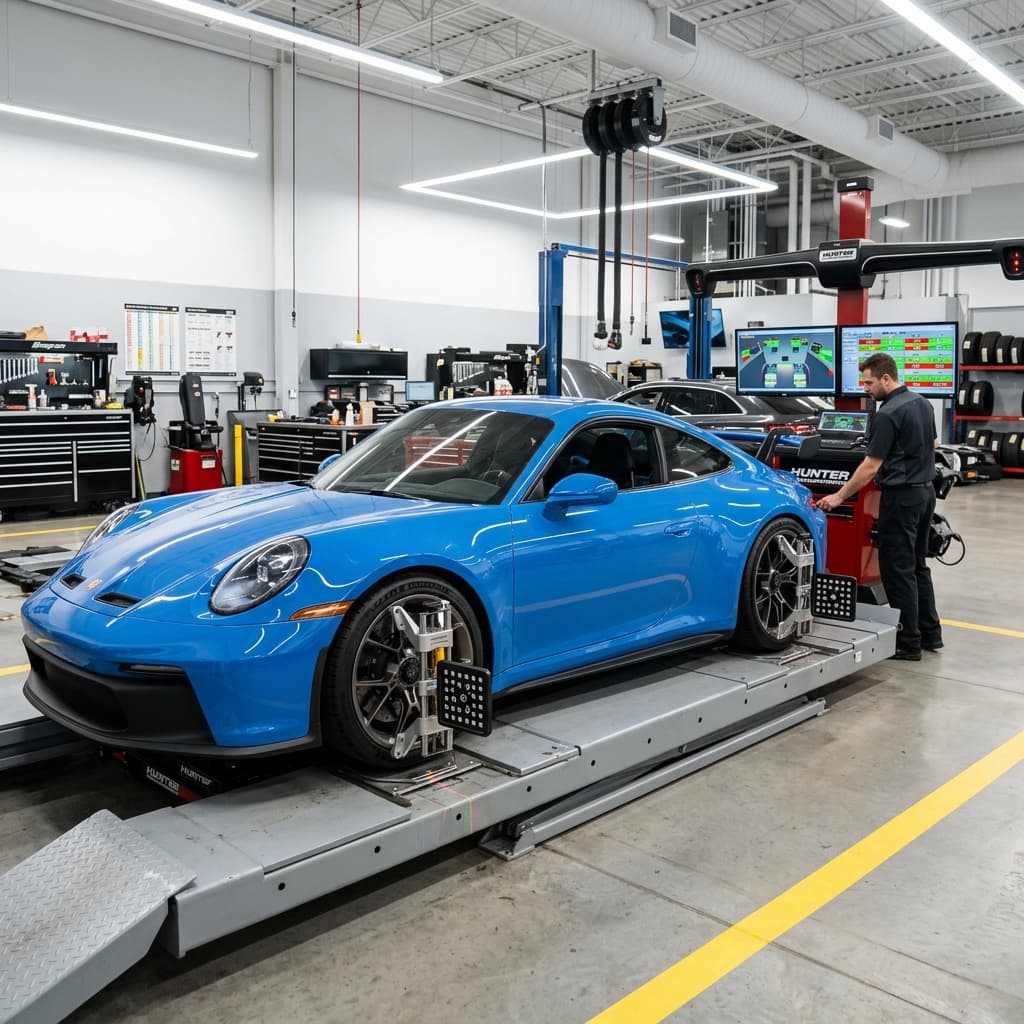
Even if your vehicle was perfectly aligned when new, alignment angles gradually shift over time. Understanding why helps you know when to have it checked.
What Causes Alignment to Change?
Road Hazards
Potholes, curbs, speed bumps taken too fast, and road debris can all shift alignment angles in an instant. Even minor impacts accumulate over time.
Suspension Wear
As bushings, ball joints, and tie rod ends wear, they develop play that allows alignment angles to shift. This is the most common cause of gradual alignment changes.
Springs Sagging
Over time, springs can sag, especially on vehicles that carry heavy loads. This changes the ride height, which directly affects camber and caster angles.
Modifications
Lifting or lowering a vehicle, installing different wheels or tires, or any suspension modification changes alignment geometry.
How Often Should You Check Alignment?
We recommend checking alignment annually, after hitting a significant pothole or curb, after any front-end collision, and whenever you install new tires. A $100 alignment check can save hundreds in premature tire wear.
At Chloe's Auto Repair, we use precision computerized alignment equipment for accurate measurements and adjustments. If your vehicle is pulling or wearing tires unevenly, book a wheel alignment service at any of our five locations.