
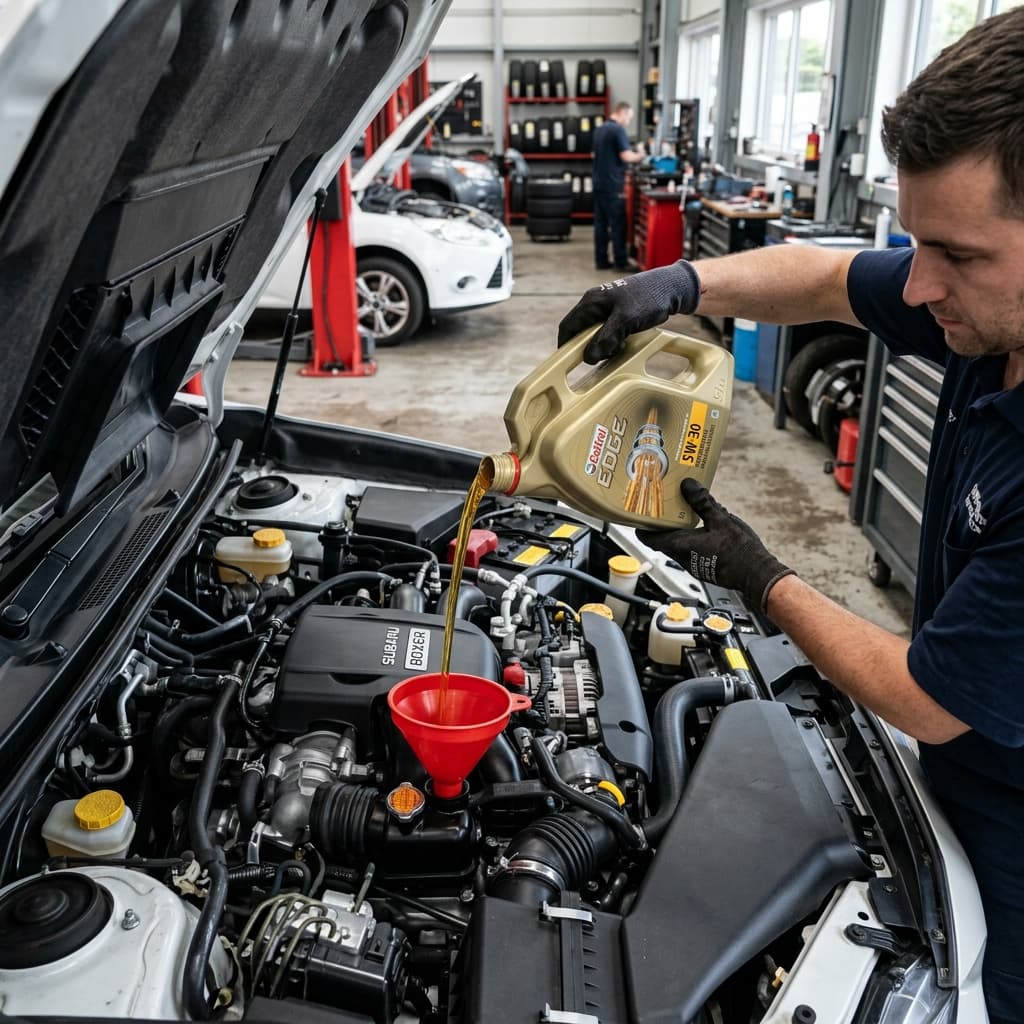
If there's one maintenance task that has the biggest impact on how long your engine lasts, it's the oil change. Not tires. Not brakes. Not the transmission. The oil change. Engine oil is what keeps the hundreds of metal surfaces inside your engine from grinding each other into scrap. When that oil breaks down — and it always breaks down — the consequences compound fast.
At Chloe's Auto Repair & Tire, our North Metro Atlanta locations (Roswell, Woodstock, Holly Springs, and Canton) handle oil changes all day, every day. Here's what you should actually know about the service, not just the marketing version.
Why Engine Oil Breaks Down
Fresh motor oil is a precision product — it's formulated to lubricate, cool, clean, and protect. But every mile it runs, it's being subjected to combustion heat, mechanical shear, and contamination from fuel blowby and metal particles. Over time:
- Viscosity changes: The oil gets thicker (or thinner, in some cases), losing its ability to flow quickly to tight clearances during cold starts.
- Additives deplete: Detergents, dispersants, antiwear agents, and corrosion inhibitors are consumed as they do their job.
- Contamination accumulates: Soot, acid, water, and fine metal particles build up in the oil. This is what makes it dark.
Old oil doesn't suddenly stop lubricating — it gradually does it worse, and the damage accumulates in bearings, camshafts, and cylinder walls over thousands of miles.
What Actually Happens During an Oil Change at Chloe's
An oil change at any of our North Metro Atlanta locations isn't just drain-and-fill. Here's the actual sequence:
1. Drain the old oil. The drain plug is removed and all old oil is captured. You'd be surprised how dark and thick it gets — we'll show you if you want to see it.
2. Replace the oil filter. The filter is replaced every time, no exceptions. A used filter with a fresh oil fill defeats half the purpose of the service — the old filter is saturated with the contaminants the previous fill captured.
3. Select the right oil. We use the viscosity and specification your manufacturer requires — not whatever's cheapest or in stock. Conventional, synthetic blend, full synthetic, and high-mileage formulas are stocked at every location. If you're not sure which your car needs, we'll look it up.
4. Multi-point inspection. Every oil change includes a complimentary inspection of tires (tread depth and pressure), brakes (pad thickness), all fluid levels, belts, hoses, filters, and battery. We photograph anything that needs attention and show you — no pressure, just information.
5. Reset the oil life monitor. If your vehicle has one, we reset it. Simple but often skipped at quick-lube chains.
How Often Do You Actually Need an Oil Change?
The old "every 3,000 miles" rule is outdated for most modern vehicles. Here's what actually applies:
- Conventional oil: Every 5,000–7,500 miles. Still appropriate for older engines or high-mileage vehicles on a budget.
- Synthetic blend: Every 7,500 miles. A middle ground for most daily drivers.
- Full synthetic: Every 7,500–10,000 miles. Most vehicles made in the last decade require it. Lasts longer, costs more, protects better at temperature extremes.
- High-mileage formula: Specifically formulated for engines over 75,000 miles — contains seal conditioners and higher levels of antiwear additives.
Your owner's manual has the definitive answer for your specific engine. If you've lost it, we can look it up by VIN.
Warning Signs You Need an Oil Change Now
Don't wait for the mileage interval if you notice any of these:
- The oil change or oil pressure warning light comes on: The oil change reminder is a maintenance alert; the oil pressure light is an emergency. If the pressure light comes on, pull over.
- The oil on the dipstick is black and gritty: Fresh oil is amber-colored. Black, thick, or gritty oil is long overdue.
- You hear increased engine ticking or noise at startup: Cold-start ticking that clears up after a few seconds is often low or degraded oil struggling to reach the upper engine.
- You're burning or consuming oil: If you're adding oil between changes, your engine has a wear or seal issue — and fresh oil more frequently is even more important.
- It's been more than a year: Even low-mileage vehicles should change oil annually, because moisture and acid accumulate regardless of miles driven.
North Metro Atlanta Conditions Matter
Georgia summers are hard on motor oil. Heat accelerates oxidation and viscosity breakdown, which means oil in a car sitting in an Atlanta summer parking lot is aging faster than the same car in a mild climate. If you run your AC hard all summer (and you should), your engine is working harder too. We generally recommend erring toward the shorter end of the oil change interval for Georgia drivers, especially for stop-and-go commuting in the metro area.
Our Roswell, Woodstock, Holly Springs, and Canton locations are all accepting appointments — or just drop in. Oil changes are first-come, first-served with no appointment needed at most locations.