
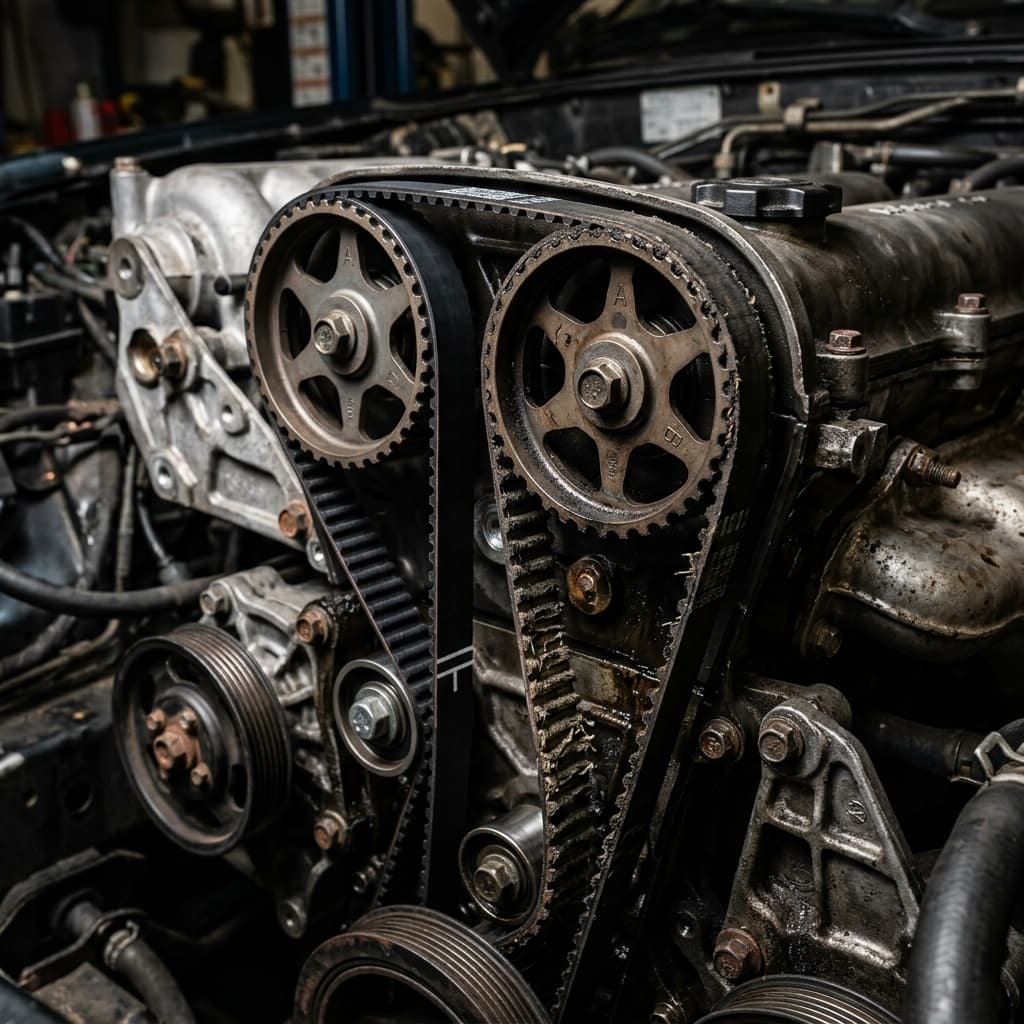
No one looks forward to a $500–$1,200 maintenance bill. But timing belt replacement is one of those services where the math is brutally simple: pay for the belt now, or pay for the engine later. On an interference engine — which is what most modern cars have — a broken timing belt doesn't just leave you stranded. It destroys pistons, valves, and sometimes the cylinder head, turning a planned maintenance item into a $3,000–$7,000+ catastrophe.
What the Timing Belt Does
The timing belt (or timing chain on some vehicles) synchronizes the rotation of the crankshaft and camshaft, ensuring that the intake and exhaust valves open and close at exactly the right moment relative to the pistons. This coordination happens thousands of times per minute at highway speed. The belt is made of reinforced rubber with precisely spaced teeth that grip sprockets on the crankshaft and camshaft. Over time and miles, the rubber degrades, the teeth wear, and the belt stretches — until it either slips or snaps entirely.
Interference vs. Non-Interference: Why It Matters
This distinction determines what happens when a timing belt breaks:
- Interference engine: The valves and pistons occupy the same space in the cylinder at different times. When the belt breaks and timing is lost, pistons slam into open valves — bending valves, cracking pistons, and potentially damaging the cylinder head. This is catastrophic and expensive. Most modern engines are interference designs because they're more fuel-efficient.
- Non-interference engine: Valves and pistons have enough clearance that they won't contact each other if timing is lost. A broken belt on a non-interference engine stalls the engine but typically causes no internal damage — you just need a new belt. These engines are less common in newer vehicles.
If you're not sure which type you have, our technicians can tell you in seconds. But the safe assumption is: your engine is probably an interference design, and the belt is not something to gamble on.
When to Replace the Timing Belt
Most manufacturers specify timing belt replacement between 60,000 and 100,000 miles — check your owner's manual for your specific vehicle. Some recommend replacement based on age as well (typically 7–10 years), because rubber deteriorates even when the vehicle isn't driven much. The timing belt is hidden behind plastic and metal covers on the front of the engine, so you can't easily inspect it visually — which is why following the mileage/age interval is critical.
What's Included in a Timing Belt Service
A quality timing belt service isn't just the belt. While the front of the engine is open, we also replace components that wear at the same rate and would otherwise require the same expensive labor to access later:
- Water pump — The pump is driven by or located behind the timing belt. If it fails after a belt-only replacement, you pay for the same labor again. Replacing it during the belt job adds $50–$150 in parts but saves $300–$500 in labor later.
- Tensioner and idler pulleys — These maintain proper belt tension. A seized tensioner can destroy a brand-new belt.
- Timing belt seals — Front crankshaft and camshaft seals that can leak oil onto the new belt.
This comprehensive approach costs more upfront than a belt-only job, but it's far more cost-effective over the life of the vehicle. It also means the entire timing system is fresh, and you won't need to revisit it for another 60,000–100,000 miles.
Timing Belt vs. Timing Chain
Many modern vehicles use timing chains instead of belts. Chains are metal, last longer, and generally don't have a scheduled replacement interval. However, they're not maintenance-free — chains stretch over time, chain guides wear, and tensioners can fail. Symptoms of a worn timing chain include a rattling noise on cold start and a check engine light with timing-related codes. If you hear rattling from the front of the engine, have it checked — a jumped timing chain on an interference engine causes the same valve damage as a broken belt.
Not sure if your vehicle has a belt or a chain? Our technicians can check in seconds during any visit to our engine repair department.
Frequently Asked Questions
How much does timing belt replacement cost?
At Chloe's Auto Repair & Tire, timing belt service (including the belt, water pump, tensioner, and idler pulleys) typically ranges from $500–$1,200 depending on the vehicle. Transverse-mounted four-cylinder engines are generally on the lower end; V6 engines with more accessories to remove are on the higher end. We provide a detailed written estimate before any work begins.
What happens if my timing belt breaks while driving?
On an interference engine, the engine stops immediately and internal damage occurs — bent valves, cracked pistons, and possibly a damaged cylinder head. Repair costs range from $3,000 to $7,000+ depending on severity. On a non-interference engine, the engine stops but typically suffers no internal damage — you just need a tow and a new belt. Either way, you're stranded wherever it happens.
Can I see or hear a timing belt going bad?
Usually not — and that's what makes it dangerous. The belt is hidden behind covers, so visual inspection requires disassembly. Some belts make a faint ticking or squealing noise as they near failure, but many snap without warning. The safest approach is to follow your manufacturer's replacement interval and not wait for symptoms.