
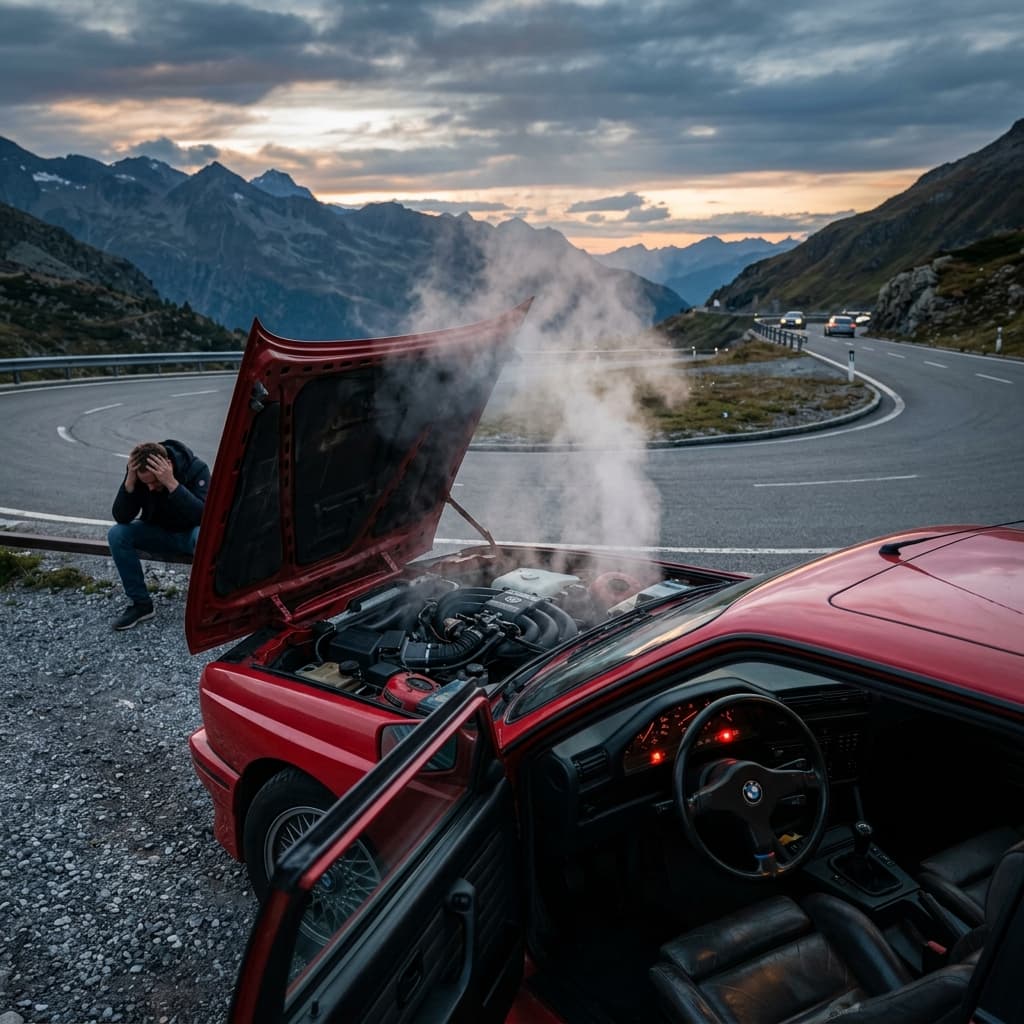
Your radiator has one critical job: transfer heat from engine coolant to the outside air. When it can't do that job — because of a leak, internal blockage, or external damage — your engine temperature climbs, and the consequences escalate quickly. A $300–$600 radiator repair that you put off can turn into a $1,500–$3,000+ head gasket failure if the engine overheats severely.
How Your Radiator Works
Engine coolant absorbs heat as it circulates through the engine block and cylinder head. The water pump pushes that hot coolant to the radiator, where it flows through thin tubes surrounded by aluminum fins. Air passing through the fins (from driving or from the radiator fan) carries the heat away, and the now-cooled fluid returns to the engine to absorb more heat. The system operates under pressure (typically 13–16 PSI) to raise the boiling point of the coolant above the engine's operating temperature.
Signs Your Radiator Is Failing
- Temperature gauge creeping above normal — The earliest warning. If your gauge is consistently higher than its usual midpoint, the cooling system is struggling.
- Coolant puddles under the vehicle — Radiator coolant is typically green, orange, or pink with a sweet smell. Puddles near the front of the vehicle point to a radiator or hose leak.
- Steam from under the hood — Coolant hitting a hot engine surface evaporates as white steam. This is an active leak happening right now — pull over safely.
- Coolant reservoir constantly low — If you're topping off coolant regularly, it's going somewhere — likely a slow radiator leak, cracked hose, or failed radiator cap.
- Discolored or rusty coolant — Fresh coolant is a vibrant color. Brown, rusty, or murky coolant indicates internal corrosion — often from the radiator itself.
- Overheating only at idle or in traffic — This often points to a failed radiator fan rather than the radiator itself, but the diagnostic process is similar.
What Causes Radiator Failure
Internal Corrosion
Coolant contains corrosion inhibitors that deplete over time. Once they're gone, the coolant becomes acidic and attacks the radiator from the inside — especially the thin aluminum tubes. This is why coolant flushes every 30,000 miles matter. A fluid flush service replaces the depleted coolant with fresh fluid before corrosion takes hold.
Plastic End Tank Cracks
Modern radiators use aluminum cores with plastic end tanks — the plastic headers where the coolant hoses connect. Over years of heating and cooling cycles, this plastic becomes brittle and cracks, causing leaks. This is the most common radiator failure mode on vehicles over 8–10 years old and is typically not repairable — the radiator needs replacement.
External Damage
Road debris, rocks, and even bugs packed into the fins can reduce cooling efficiency. A radiator that's been impacted by a rock can develop a pinhole leak that's hard to find until the coolant level drops significantly. Bent or clogged fins reduce airflow, causing gradual overheating that worsens in summer traffic.
Failed Radiator Cap
The radiator cap maintains system pressure. A cap that can't hold pressure allows coolant to boil at a lower temperature, causing intermittent overheating. It's a $15 part that can mimic the symptoms of a much more serious problem — always worth checking first.
Why You Shouldn't Ignore Overheating
An engine that overheats severely — gauge pegged in the red, steam pouring out — can suffer catastrophic damage in minutes. Head gasket failure is the most common result, allowing coolant to mix with engine oil or leak into the combustion chambers. A head gasket repair runs $1,500–$3,000+ depending on the engine. In severe cases, the cylinder head itself warps, adding a machine shop resurface or head replacement to the bill. The message is simple: fix cooling system problems early.
At Chloe's Auto Repair & Tire, our radiator repair service includes a pressure test to locate leaks, thermostat function check, radiator fan operation test, and coolant condition analysis. We'll tell you whether a repair, a flush, or a full replacement is the right call for your specific situation.
Frequently Asked Questions
Can a radiator leak be repaired or does it need replacement?
It depends on the location and type of leak. Small pinhole leaks in the aluminum core can sometimes be repaired by a radiator shop. However, cracked plastic end tanks cannot be reliably repaired — the plastic is too brittle for lasting fixes. In most cases, a new radiator is the most cost-effective long-term solution, especially when the old unit is showing age-related deterioration.
How often should coolant be replaced?
Most manufacturers recommend a coolant flush every 30,000 miles or 3 years, whichever comes first. Some newer vehicles use extended-life coolant rated for 100,000 miles — check your owner's manual. Regardless of type, we check coolant condition during every service visit. Dark, rusty, or cloudy coolant should be flushed regardless of mileage.
Can I just add water if my coolant is low?
In an emergency, plain water will keep the engine from overheating long enough to reach a shop. But water alone provides no corrosion protection, no freeze protection, and a lower boiling point than proper coolant mix. Running straight water for more than a few days accelerates internal corrosion. Always refill with the correct coolant type for your vehicle — mixing coolant types can cause gelling and clogging.