
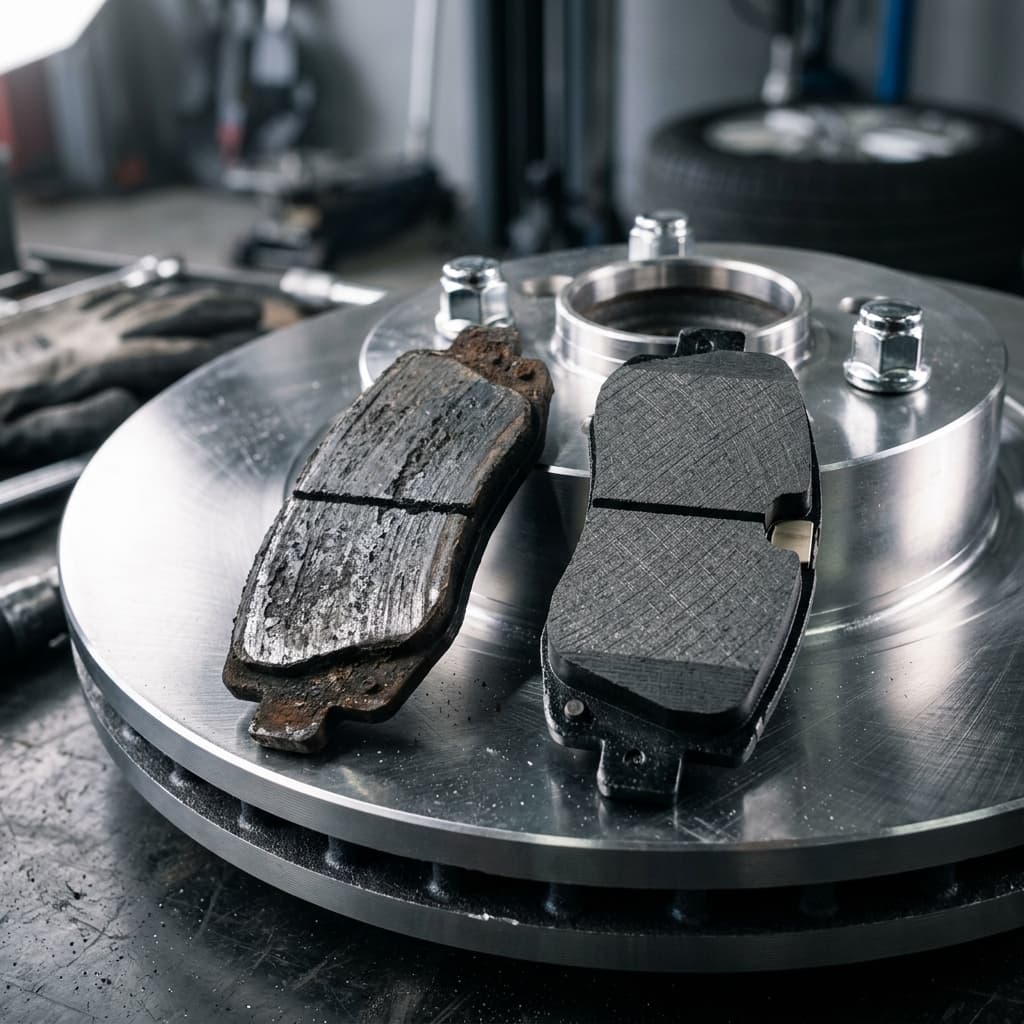
Brake maintenance is one of those things where being proactive saves you a significant amount of money — and keeps you safe. The difference between catching a brake issue early and ignoring it until it's urgent can easily be the difference between a $200 repair and an $800 one. Here's what preventative brake maintenance actually involves and how to stay ahead of the wear curve.
The Real Cost Difference: Early vs. Late Brake Service
| Scenario | What's Needed | Typical Cost |
|---|---|---|
| Pads caught at 3–4mm (routine inspection) | Brake pads only | $150–$250/axle |
| Pads worn to 1–2mm (overdue) | Pads + rotor resurfacing | $300–$500/axle |
| Metal-on-metal (worn through) | Pads + new rotors | $450–$800+/axle |
| Ignored until brake failure | Pads, rotors, calipers, possible lines | $1,000+ |
That math makes a compelling case for routine inspection. A free inspection (included with any service at Chloe's) can save you hundreds.
What Brake Maintenance Actually Involves
Brake Pad Inspection
Brake pads are the wearing component designed to be replaced. New pads are typically 10–12mm thick. At 6mm, you're at the halfway mark. At 3mm, it's time to schedule replacement. At 2mm, replacement is urgent. Below 1mm, you risk grinding metal-on-metal — which damages rotors and exponentially increases your repair cost.
Rotor Inspection
Rotors wear too, just more slowly than pads. Technicians measure rotor thickness with a micrometer and compare it to the manufacturer's minimum spec. A rotor below minimum thickness can't safely dissipate heat, increasing stopping distance. Inspectors also look for scoring, uneven wear (called disc thickness variation), and rust. Light surface rust is normal — deep scoring or pitting means it's time to replace.
Brake Fluid Check
Brake fluid is hygroscopic — it absorbs moisture from the air over time. Water contamination lowers the fluid's boiling point, which can cause brake fade on long downhill stretches or during aggressive braking. Fluid should be clear to light amber. Dark, murky fluid is overdue for a flush. Most manufacturers recommend brake fluid replacement every 2–3 years regardless of mileage.
Caliper and Hardware Inspection
Calipers squeeze the brake pads against the rotor. A sticking caliper can cause uneven pad wear, pulling to one side, or a dragging feel. Brake hardware — the clips, pins, and shims that hold the pads — corrodes and wears over time and should be replaced whenever pads are replaced.
Brake Line and Hose Check
Brake lines carry hydraulic pressure from the master cylinder to each wheel. Metal lines can rust; rubber hoses can crack or swell internally. A visual inspection of accessible lines and hoses is part of any thorough brake check.
How Often Should You Have Brakes Inspected?
- Every 12 months or 12,000 miles — for most daily drivers
- Every 6 months — if you drive in stop-and-go Atlanta traffic, tow frequently, or drive in hilly terrain
- Any time you notice a warning sign — don't wait for your next scheduled appointment
At Chloe's Auto Repair & Tire, we inspect brakes on every vehicle that comes through the shop — it's part of our complimentary multi-point inspection. You don't need a separate brake appointment; we check them when you come in for an oil change, tire rotation, or any other service.
Warning Signs That Mean Inspect Now (Not at Your Next Oil Change)
- Squealing or squeaking when braking — this is the wear indicator doing its job; schedule service soon
- Grinding metal-on-metal sound — urgent; you're past the wear indicator and potentially damaging rotors
- Vibration or pulsation in the pedal — usually means disc thickness variation ("warped rotors")
- Soft or spongy brake pedal — can indicate low fluid, air in the lines, or a master cylinder issue
- Car pulling to one side when braking — often a sticking caliper or uneven pad wear
- Brake warning light — a yellow/orange light means brake fluid is low; a red light with "BRAKE" means stop driving immediately
- Burning smell after driving — overheating brakes from a dragging caliper or severe overuse
- Longer stopping distance — any noticeable increase in how far it takes to stop is a safety concern
How Long Do Brake Pads Actually Last?
Brake pad life varies enormously depending on your driving style, vehicle weight, and terrain. The general ranges:
- City driving (heavy traffic, frequent stops): 25,000–40,000 miles
- Highway driving (fewer, gentler stops): 40,000–70,000 miles
- Aggressive driving or frequent towing: 15,000–25,000 miles
Front brakes wear faster than rear brakes because they do 70–80% of the stopping work. It's normal for front pads to need replacement twice for every one rear replacement.
Frequently Asked Questions About Brake Maintenance
How do I know when my brakes need to be checked?
The clearest signal is the wear indicator squeal — a high-pitched squeak designed to tell you pads are getting thin. But don't rely only on that; get brakes inspected annually regardless of sound, since rear brakes and some vehicles don't have audible indicators.
Is it okay to wait a little longer after brakes start squealing?
A few weeks is usually fine if it's the wear-indicator squeal. But grinding or metal-on-metal sounds mean you're already damaging rotors — drive to a shop that day. Every mile on metal-on-metal brakes makes the repair more expensive.
Can I just replace the pads and skip the rotors?
If rotors are above minimum thickness, undamaged, and have even wear, yes — resurfacing or keeping them is fine. If they're below spec, scored, or showing thickness variation, replacing them is the right call. A technician can measure your specific rotors and give you a straight answer.
Does Chloe's really do free brake inspections?
Yes. With any service visit — oil change, tire rotation, or any other service — we inspect your brakes as part of our multi-point inspection at no extra charge. We'll tell you pad thickness, rotor condition, fluid status, and caliper health. No pressure, no upsell — just the information you need to make a smart decision.
Ready to know where your brakes stand? Visit any Chloe's Auto Repair & Tire location — we'll inspect your brakes, show you photos of what we find, and give you an honest assessment. No appointment needed.