
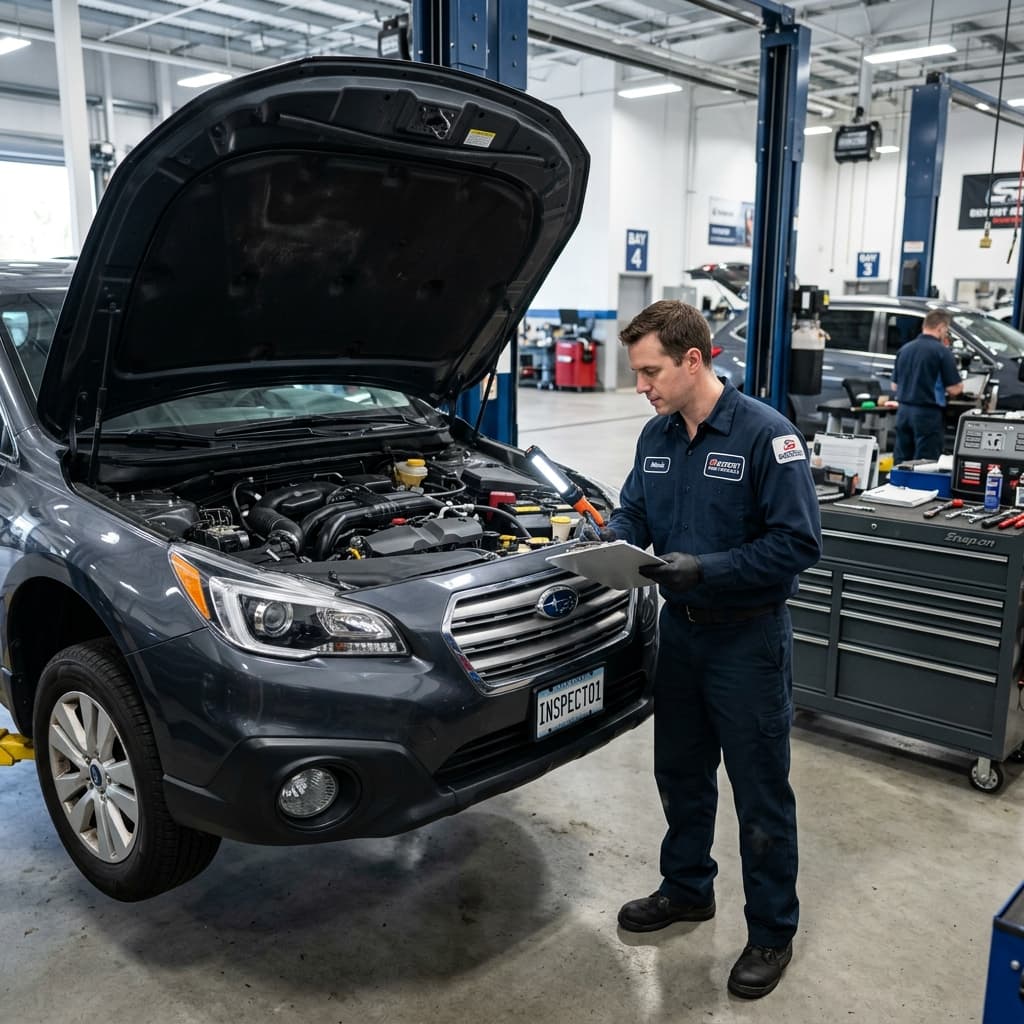
If your business depends on vehicles — whether it's two work trucks or twenty delivery vans — fleet maintenance isn't optional. It's the backbone of your daily operations. A single breakdown can mean missed appointments, lost revenue, and unhappy customers. Yet many small business owners treat fleet vehicles the same way they treat personal cars: fix them when something breaks.
That reactive approach is expensive. Proactive fleet maintenance keeps your vehicles on the road, your drivers safe, and your repair costs predictable. This guide covers everything you need to know to build a fleet maintenance program that actually works.
Why Fleet Maintenance Matters
Uptime Is Revenue
Every day a vehicle sits in a shop is a day it's not generating income. For service businesses — HVAC contractors, plumbers, landscapers, delivery companies — a vehicle out of commission means a crew sitting idle or jobs getting rescheduled. Preventive maintenance dramatically reduces unplanned downtime by catching worn parts before they fail on the road.
Safety and Liability
Business owners have a legal and ethical responsibility to keep fleet vehicles safe. Worn brakes, bald tires, faulty lights, and steering issues put your drivers and the public at risk. If a fleet vehicle is involved in an accident and an investigation reveals deferred maintenance, the liability exposure is enormous. Regular inspections and documented maintenance create a defensible safety record.
Resale Value
Fleet vehicles are depreciating assets, but well-maintained vehicles retain significantly more value at trade-in or sale. A vehicle with complete maintenance records and no deferred repairs will command 20–30% more at resale than one with gaps in its service history.
Recommended Fleet Maintenance Schedule by Mileage
While every vehicle has manufacturer-specific intervals, here's a practical baseline schedule for most fleet trucks, vans, and cars:
Every 5,000–7,500 Miles
- Oil and filter change — the single most important maintenance item for engine longevity
- Tire pressure check and rotation — uneven wear kills tires early and hurts fuel economy
- Multi-point visual inspection — belts, hoses, fluid levels, lights, wipers
Every 15,000–30,000 Miles
- Brake inspection — measure pad thickness and check rotors for scoring or warping
- Air filter replacement — a clogged filter reduces power and fuel efficiency
- Cabin air filter replacement — keeps HVAC working efficiently for driver comfort
- Transmission fluid check — look for discoloration or burnt smell
- Coolant level and condition check — top off or flush as needed
Every 30,000–60,000 Miles
- Brake pad and rotor replacement — as needed based on inspection findings
- Spark plug replacement — maintains fuel efficiency and smooth running
- Transmission service — fluid and filter change per manufacturer specs
- Coolant system flush — prevents corrosion and overheating
- Power steering fluid service — if applicable
- Battery test and replacement — fleet batteries typically last 3–4 years
Every 60,000–100,000 Miles
- Timing belt or chain inspection/replacement — critical on interference engines
- Suspension component inspection — shocks, struts, bushings, ball joints
- Major fluid overhaul — differential fluid, transfer case fluid (if AWD/4WD)
Tracking Maintenance Across Multiple Vehicles
The biggest challenge for fleet owners isn't knowing *what* to do — it's keeping track of it across multiple vehicles with different mileages and service histories. Here are proven approaches:
Spreadsheet tracking — At minimum, maintain a spreadsheet for each vehicle with columns for date, mileage, service performed, and next service due. This works for fleets under 5 vehicles but gets unwieldy beyond that.
Fleet management software — Tools like Fleetio, AUTOsist, or even a shared Google Sheet with automated reminders can track every vehicle, send alerts when service is due, and store digital copies of invoices. The cost of fleet software is trivial compared to the cost of a missed oil change that kills an engine.
Single-shop relationship — Working with one trusted repair shop simplifies tracking enormously. Your shop maintains service histories for every vehicle, can flag upcoming needs proactively, and often offers fleet accounts with streamlined scheduling and consolidated billing.
Common Fleet Vehicle Failures and How to Prevent Them
Engine Failure from Oil Neglect
This is the number-one fleet killer. Vehicles driven hard — frequent stops, heavy loads, hot climates — burn through oil faster than personal vehicles. Sticking to 5,000-mile oil change intervals (not 7,500 or 10,000) is cheap insurance. A $75 oil change prevents a $5,000+ engine replacement.
Brake System Failures
Fleet vehicles, especially those carrying tools, equipment, or cargo, are heavier than their personal counterparts. Extra weight means extra brake wear. Inspect brakes every 15,000 miles and replace pads before they reach minimum thickness.
Cooling System Breakdowns
Overheating is the leading cause of roadside breakdowns in commercial vehicles. Coolant degrades over time, hoses develop weak spots, and thermostats fail. A cooling system inspection at every oil change catches these issues early.
Tire Blowouts
Underinflated tires on loaded vehicles run hot and fail catastrophically. Check tire pressures weekly on fleet vehicles — not monthly like a personal car. Replace tires at 4/32" tread depth rather than the legal minimum of 2/32", because fleet vehicles often carry loads that demand better traction and shorter stopping distances.
Electrical and Battery Issues
Fleet vehicles often have aftermarket accessories — ladder racks, inverters, tool chargers, GPS units — that put extra load on the electrical system. Test batteries every 6 months and ensure the alternator is producing adequate voltage under load.
Benefits of a Single Trusted Shop vs. a Dealer Network
Many fleet owners default to taking vehicles to the nearest dealer. While dealers know their specific brand, there are significant advantages to building a relationship with a single independent shop:
- Consistency — The same technicians see your vehicles every time, so they know the history and can spot trends
- Flexibility — Independent shops offer more scheduling flexibility and faster turnaround than busy dealer service departments
- Cost — Independent shops typically charge 20–40% less than dealer labor rates with the same quality parts
- Fleet accounts — A good independent shop will set up fleet billing, priority scheduling, and proactive maintenance reminders
- Multi-make capability — If your fleet includes Ford trucks, Chevy vans, and Toyota sedans, one independent shop handles them all instead of three separate dealers
At Chloe's Auto Repair & Tire, we service fleet vehicles for businesses across Georgia and Texas. Our ASE-certified technicians handle everything from oil changes to major engine and transmission work, and we keep detailed digital records for every vehicle in your fleet.
Frequently Asked Questions
How often should fleet vehicles be serviced?
Fleet vehicles should be serviced every 5,000–7,500 miles for oil changes and basic inspections, with more comprehensive services at 15,000, 30,000, and 60,000-mile intervals. Vehicles that operate in severe conditions — stop-and-go traffic, extreme heat, heavy loads, or dusty environments — should follow the shorter end of these intervals. The most important thing is consistency: a missed service interval on one vehicle can cascade into a costly breakdown.
What maintenance records should I keep?
Keep every invoice, work order, and inspection report for each vehicle. At minimum, your records should include the date and mileage of every service, what work was performed, what parts were used, and what was recommended for future service. These records are essential for warranty claims, resale value, insurance disputes, and demonstrating regulatory compliance. Digital records stored in fleet management software or provided by your repair shop are ideal.
Is fleet maintenance tax deductible?
Yes — fleet vehicle maintenance and repair costs are generally tax deductible as business expenses. This includes oil changes, tires, brake work, inspections, and all routine and unexpected repairs on vehicles used for business purposes. Fuel, insurance, and depreciation are also deductible. Keep detailed records and consult your accountant for specifics on your situation, as deduction rules vary based on vehicle use percentage and business structure.