
Think of your fuel system as a precision delivery network. The fuel pump pulls gasoline from the tank, pushes it through the fuel filter to remove contaminants, and delivers it under pressure to the fuel injectors. Each injector sprays a precisely metered mist of fuel into its cylinder at exactly the right moment. When any link in this chain degrades — a clogging filter, dirty injectors, or a weakening pump — the entire system compensates, and your engine pays the price in performance, efficiency, and eventually expensive repairs.
How Your Fuel System Works
Modern fuel-injected engines operate the fuel system at 40–65 PSI of pressure (direct injection systems run even higher, at 2,000+ PSI). The fuel pump, located inside the fuel tank on most modern vehicles, runs continuously while the engine is on. It pushes fuel through the fuel filter (which traps particles as small as 10 microns), along the fuel rail to the injectors, and a fuel pressure regulator maintains consistent pressure regardless of engine load.
The Three Most Common Fuel System Problems
Clogged Fuel Injectors
Fuel injectors have tiny openings — some as small as a human hair — that spray fuel in a precise cone-shaped pattern. Over thousands of miles, carbon deposits from combustion build up on these openings, disrupting the spray pattern. The result: rough idle, hesitation during acceleration, poor fuel economy, and misfires. A professional fuel injection cleaning service restores the spray pattern and flow rate, often making a noticeable difference in how the vehicle drives. This is far more effective than fuel system additives from the auto parts store.
Restricted Fuel Filter
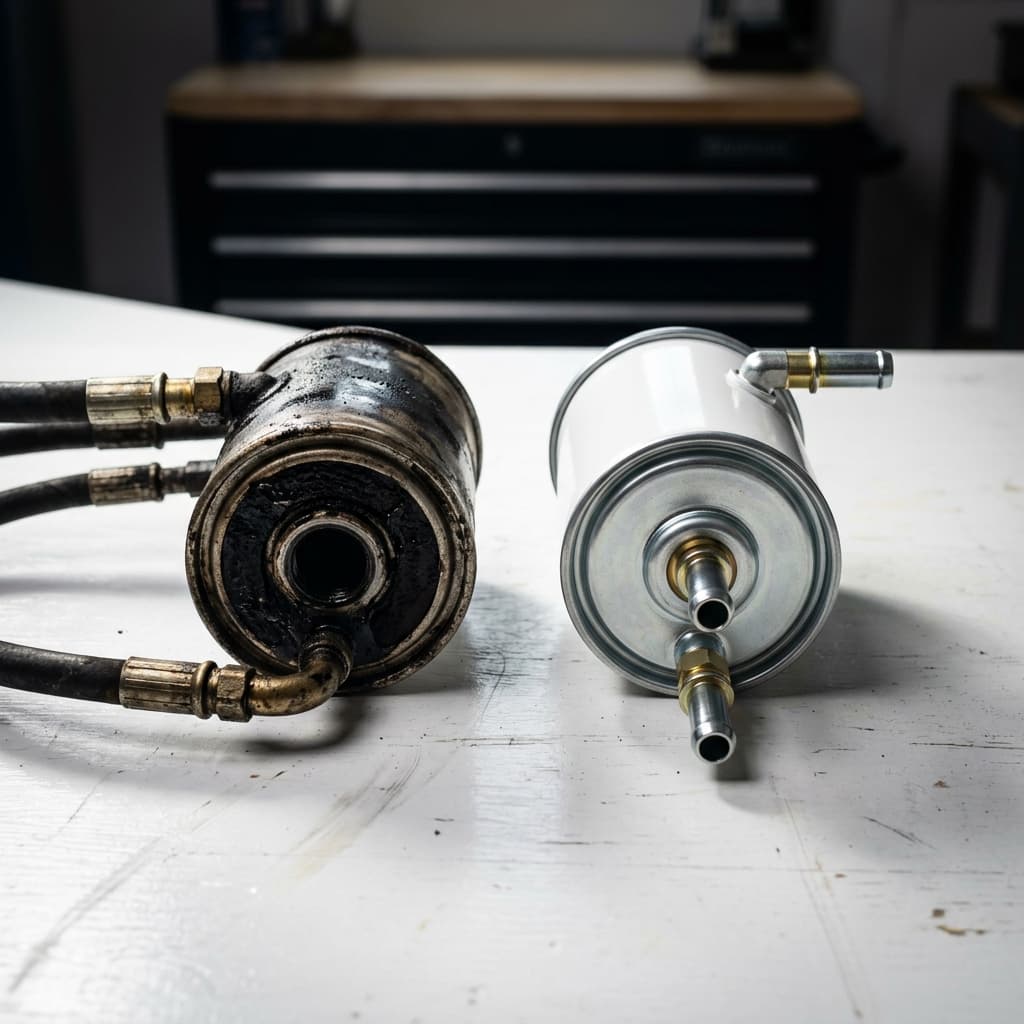
The fuel filter is the unsung hero of the fuel system. It catches rust, dirt, and debris that would otherwise destroy the fuel injectors. As the filter accumulates contaminants, fuel flow becomes restricted. The fuel pump works harder to push fuel through the blockage, which accelerates pump wear dramatically. Here's the expensive math: a fuel filter replacement costs around $30–$80 in most vehicles. A fuel pump replacement — when the pump burns out from overwork — costs $500–$900+. Many modern vehicles have the fuel filter integrated into the fuel pump assembly inside the tank, making regular engine diagnostics that check fuel pressure even more important.
Fuel Pump Failure
Fuel pumps don't usually fail suddenly — they degrade gradually. Early warning signs include a whining noise from the fuel tank area (the pump motor struggling), loss of power under heavy acceleration or when climbing hills (pump can't maintain pressure at high demand), and hard starting when the engine is hot (fuel vapor issues from low pressure). By the time the pump fails completely, you're stranded.
Signs Your Fuel System Needs Attention
- Engine hesitates or stumbles during acceleration — fuel delivery can't keep up with demand
- Hard starting or extended cranking — low fuel pressure or leaking injectors
- Noticeable decrease in fuel economy — incomplete combustion from poor injector spray
- Rough idle that smooths out at higher RPM — injectors partially clogged
- Strong fuel odor inside or outside the vehicle — fuel line leak or injector seal failure
- Whining from the fuel tank area — fuel pump motor wearing out
- Loss of power under load — fuel pump or filter restriction
Professional Diagnosis vs. Parts Swapping
At Chloe's Auto Repair & Tire, our fuel system service starts with professional fuel pressure testing at the fuel rail — measuring actual delivery pressure against factory specs. We perform injector flow analysis to determine whether cleaning will restore performance or replacement is necessary. This diagnostic approach means we fix the actual problem rather than swapping parts until something works. Every qualifying fuel system repair is backed by our 3-year/36,000-mile nationwide warranty.
If your check engine light is on with fuel system-related codes, our engine diagnostics team can read manufacturer-specific data to pinpoint the issue.
Frequently Asked Questions
Do fuel system additives actually work?
Over-the-counter fuel system cleaners provide marginal benefit for light carbon buildup. However, they're no substitute for a professional fuel injection cleaning service, which uses pressurized cleaning agents at much higher concentrations delivered directly through the fuel rail. Think of it like the difference between using mouthwash and getting a professional dental cleaning — both have their place, but one is far more thorough.
How often should fuel injectors be cleaned?
There's no universal interval — it depends on fuel quality, driving conditions, and vehicle design. Many shops recommend professional fuel injection cleaning every 30,000–45,000 miles as preventive maintenance. If you're experiencing symptoms of dirty injectors (rough idle, hesitation, poor fuel economy), cleaning is warranted regardless of mileage. Direct injection engines are particularly prone to carbon buildup and benefit from more frequent cleaning.
Can I drive with a failing fuel pump?
You can drive with a weakening fuel pump, but it's unpredictable — it may fail completely at any time, leaving you stranded. If you're hearing the whining noise or experiencing loss of power under load, schedule service soon. If the pump has failed completely, the engine won't start and the vehicle needs to be towed. A failing pump that's still running is a ticking clock — it's better to replace it on your schedule than on the side of the highway.