
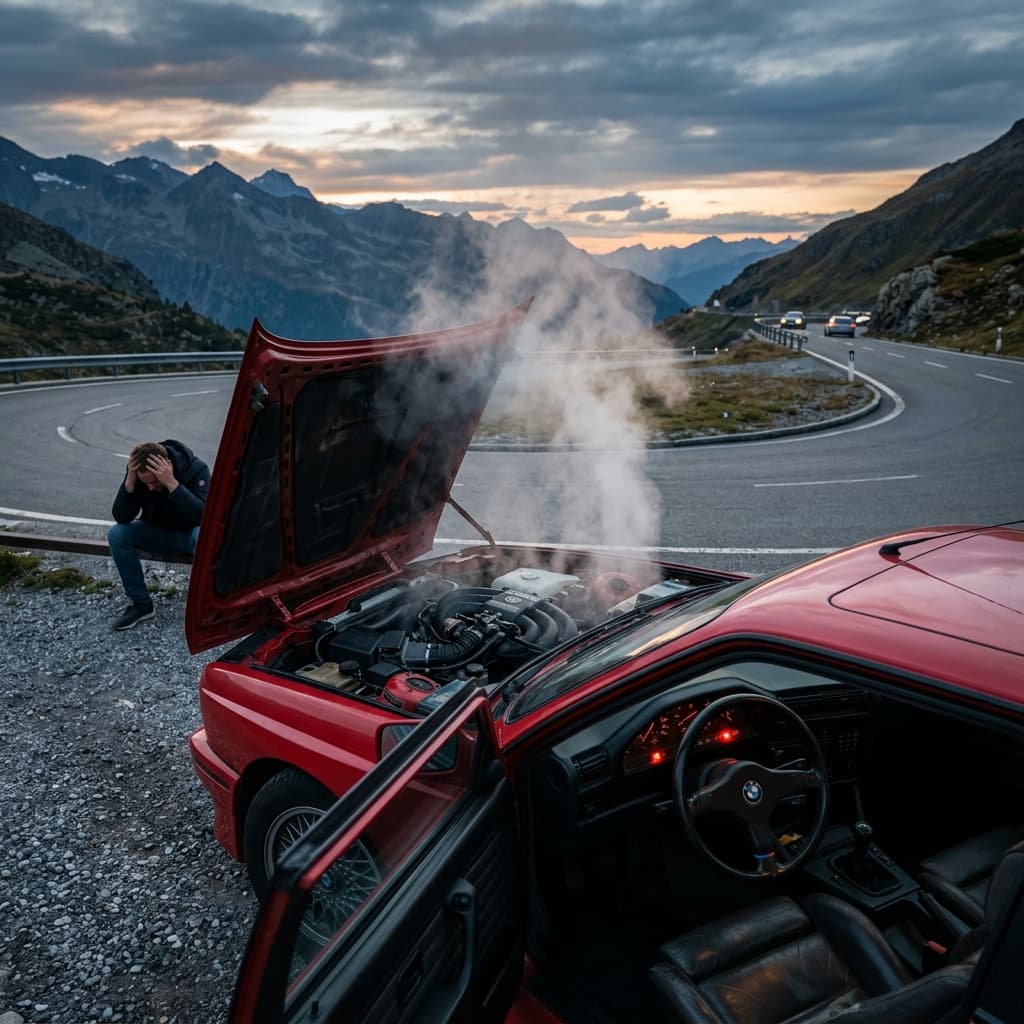
The temperature gauge in your car is one of the most important instruments on the dashboard, and one of the most ignored — right up until it isn't. Most drivers are vaguely aware of a midpoint on the gauge and only notice it when the needle climbs into unfamiliar territory. Here's what that gauge is actually telling you.
Running slightly warm — gauge needle a fraction above center — can happen on a hot day in heavy traffic and doesn't automatically mean catastrophe. But once that needle approaches the red zone, the situation changes fast. An engine operating above its designed temperature range is actively destroying itself. Head gaskets fail. Cylinder heads warp. In severe cases, the block itself cracks. These are not cheap repairs: a head gasket job runs $1,500–$3,000 and that's on a cooperative engine. A warped head or cracked block can total a vehicle.
The window between "gauge in the red" and "engine damage begins" is measured in minutes. Not because we're being dramatic — because that's the physics. Aluminum cylinder heads distort at sustained high temperatures. Metal expands and seals fail. Every minute you keep driving an overheating engine compounds the damage exponentially.
What to Do When Your Car Overheats (Right Now)
If the temperature gauge is climbing toward red or already there, follow these steps in order:
1. Turn off the AC immediately. The AC compressor adds load to the engine. Killing it reduces the strain on a system that's already struggling.
2. Turn the heater to MAX heat — full blast. This feels counterintuitive but it works. The heater core is essentially a small radiator inside the cabin. Running the heater on full draws heat away from the engine coolant and dumps it into the cabin. It's uncomfortable, but it can buy you enough time to get off the road safely.
3. If the gauge stays red: pull over. Find a safe spot, pull completely off the roadway, and shut the engine off. Do not sit in traffic with an overheating engine hoping it cools down — it won't. Traffic is one of the worst scenarios because you're losing airflow through the radiator at low speeds.
4. Do NOT open the radiator cap when the engine is hot. The cooling system runs under pressure — typically 15–16 PSI. When the engine is hot, the coolant is well above 180°F and the system is pressurized. Opening the cap releases that pressure instantly and sends scalding coolant spraying outward. People are seriously burned this way every year. Wait at minimum 30–45 minutes after the engine shuts off before touching the cap — longer if in doubt.
5. Call for a tow. If the gauge went into the red, don't try to make it to the shop. Every additional mile you drive risks head gasket failure, and a head gasket job starts at $1,500. A tow costs $75–$150. The math is not close. Call a tow truck, let the shop diagnose it cool, and find out what you're actually dealing with before you drive it anywhere.
The 7 Most Common Causes of Overheating
1. Low or depleted coolant. This is the most common cause by a significant margin. Coolant is consumed slowly by leaks, or neglected over time — eventually there's not enough fluid in the system to transfer heat away from the engine. If your reservoir is consistently low but you're not seeing a puddle under the car, suspect an internal leak (head gasket) or a slow weep at a hose clamp.
2. Coolant leak. Leaks happen at radiators, upper and lower hoses, the water pump, head gasket, heater core, and the overflow reservoir. An active leak means the system is losing coolant faster than the car can function normally. Even a small leak gets worse under pressure and heat.
3. Failed water pump. The water pump is what circulates coolant through the entire system. If the impeller fails or the pump seizes, coolant stops moving — and a stagnant cooling system overheats fast. Water pump failure is common at higher mileage and often occurs alongside timing belt/chain service since they share access.
4. Stuck thermostat (closed position). The thermostat regulates coolant flow based on temperature. When it sticks closed, coolant can't flow from the engine to the radiator to cool down. The engine heats up with no relief. Thermostats are inexpensive parts — the labor to access them varies by vehicle.
5. Clogged radiator. Radiators clog two ways: internally from scale, rust, and degraded coolant deposits, and externally from debris (bugs, leaves, mud) blocking airflow through the fins. Internal clogging is the more serious problem and is largely preventable with regular coolant flushes.
6. Failed radiator fan. The radiator fan pulls air through the radiator when the car is stationary or moving slowly — exactly when you're most vulnerable to overheating. A fan that's failed (electric motor, relay, or temp sensor) shows up specifically as overheating at idle or in traffic, but normal temperatures at highway speed. That pattern is the diagnostic tell.
7. Head gasket failure. The head gasket seals the combustion chambers from the coolant passages. When it fails, coolant can enter the combustion chamber (burned off as white smoke) or oil can mix with coolant (producing the infamous milky-brown sludge on the dipstick or in the reservoir). Head gasket failure is both a cause and an effect of overheating — a car that overheats once can blow a head gasket, and a blown head gasket causes further overheating. It's a spiral.
Reading the Warning Signs Before You're in the Red
Overheating rarely comes out of nowhere. There are almost always precursor symptoms that get ignored or misread. Know these:
Temperature gauge creeping above midpoint. Normal operating temperature for most engines puts the needle at or near center. If yours is consistently running a quarter-needle above center, something has changed. It doesn't always mean a crisis is imminent — but it warrants a cooling system inspection.
Sweet smell from the engine bay. Coolant (ethylene glycol) has a distinct sweet, almost syrupy smell. If you're getting that from under the hood, especially after a drive, you have a leak somewhere. It may be small now. It won't stay small.
Steam from under the hood. If you can see steam, coolant is boiling and escaping the system. This is past the warning stage.
Heater suddenly blowing cold. This is a frequently misread symptom. If your heater starts putting out cold air instead of hot, it often means there's an air pocket in the cooling system displacing coolant from the heater core. Air pockets in the cooling system are a head gasket failure symptom. Don't chalk it up to a broken heater without investigating.
Coolant reservoir dropping repeatedly. Adding coolant to top it off and having it drop again tells you there's a leak somewhere — internal or external. Coolant doesn't evaporate in a healthy system.
White exhaust smoke. A little white vapor on a cold morning is condensation — normal. Sustained white smoke from the exhaust on a warm engine means coolant is burning in the combustion chamber. This is a head gasket symptom. Don't ignore it.
Coolant Leaks: Where They Come From
| Source | Visual Clue | Urgency |
|---|---|---|
| Radiator | Puddle under front of car, visible coolant on radiator fins or tanks | High — system loses pressure and fluid quickly |
| Upper/lower hose | Wet hose exterior, cracks, or drips at clamp connections | High — hoses fail suddenly under pressure |
| Water pump | Coolant dripping from weep hole below pump body | High — replace before it fails completely |
| Head gasket | White smoke from exhaust, oil in coolant (milky/brown), coolant in oil | Tow immediately — do not drive |
| Heater core | Sweet smell inside cabin, foggy windshield, wet passenger floor | Moderate — can leak slowly for a while before forcing action |
| Overflow tank | Crack or split in plastic reservoir, coolant on surrounding area | Moderate — easy fix when caught early |
Radiator Flush: What It Is and When You Need It
Coolant isn't a lifetime fluid. Over time the corrosion inhibitors in the coolant deplete, the pH drops, and the fluid becomes acidic. Acidic coolant corrodes the radiator, water pump, and heater core from the inside out. That internal corrosion is exactly what causes clogged radiators and premature water pump failure.
Most manufacturers recommend a coolant flush every 30,000 miles or every 2–3 years — check your owner's manual for your specific vehicle. Extended-life coolants (typically orange or pink, OAT-based) may go longer, but that doesn't mean indefinitely.
A flush at an independent shop typically runs $100–$175. The process involves draining the old coolant, flushing the system with water or a cleaning agent, and refilling with the correct coolant type at the correct concentration (usually 50/50 mix with distilled water).
Signs you're overdue: coolant that looks brown or rusty instead of green, orange, or pink; fluid that's been in the car for more than 3 years; any recent overheating episode; or unexplained temperature fluctuations during normal driving.
Our radiator and cooling service includes a full inspection of the cooling system — hoses, cap, thermostat, water pump, and coolant condition — along with a flush and refill if needed.
Overheating Repair Costs
| Repair | Typical Cost |
|---|---|
| Coolant flush and refill | $100–$175 |
| Thermostat replacement | $150–$300 |
| Radiator hose replacement | $100–$250 |
| Water pump replacement | $300–$700 |
| Radiator replacement | $400–$900 |
| Head gasket repair | $1,500–$3,000+ |
These ranges reflect independent shop pricing in the Atlanta metro area. Dealer pricing runs higher. The spread within each range depends on vehicle make, engine layout, and parts cost — a water pump on a front-wheel drive compact is a different job than one on a truck with a transversely mounted V6.
Frequently Asked Questions
Can I drive with a slightly high temperature gauge?
A needle that's a fraction above center on a hot day in stop-and-go traffic may not be an emergency — but it's a signal. If it consistently runs warm under normal conditions, something is off: low coolant, a weak thermostat, a cooling fan not performing at full capacity. Get it inspected before that "slightly warm" becomes fully overheated on the highway. Do not drive with the gauge in or near the red zone.
How long can an engine run hot before damage?
It depends on how hot and on the engine, but the honest answer is: not long. Sustained operation well above normal operating temperature can cause head gasket failure within minutes. A brief spike — gauge hits red, you pull over immediately — may cause no lasting damage. A continued drive of even 5–10 minutes in the red can warp an aluminum cylinder head. The faster you respond, the better your odds of keeping this a minor repair.
Is it safe to add water if I have no coolant?
In a genuine emergency where you're stranded with an overheated engine and no coolant, adding clean water is better than driving with none — water will at least circulate and transfer some heat. Use distilled water if available; tap water contains minerals that accelerate internal corrosion. Understand that water alone lowers the boiling point protection and provides no freeze protection, so it's a temporary measure only. Get the system flushed and properly refilled with the correct coolant mix as soon as possible afterward.
How do I know if my head gasket is blown?
The classic signs: white smoke from the exhaust that doesn't clear after warm-up, a milky or foamy residue on the oil dipstick or under the oil cap (coolant mixing with oil), coolant loss without any visible external leak, bubbling in the coolant reservoir, and a heater that suddenly blows cold. A shop can confirm with a combustion leak test (a chemical test that detects exhaust gases in the cooling system) — this is the definitive way to diagnose a head gasket without tearing the engine down. If multiple signs are present, don't drive the vehicle. The more you drive on a blown head gasket, the more collateral damage you create.