
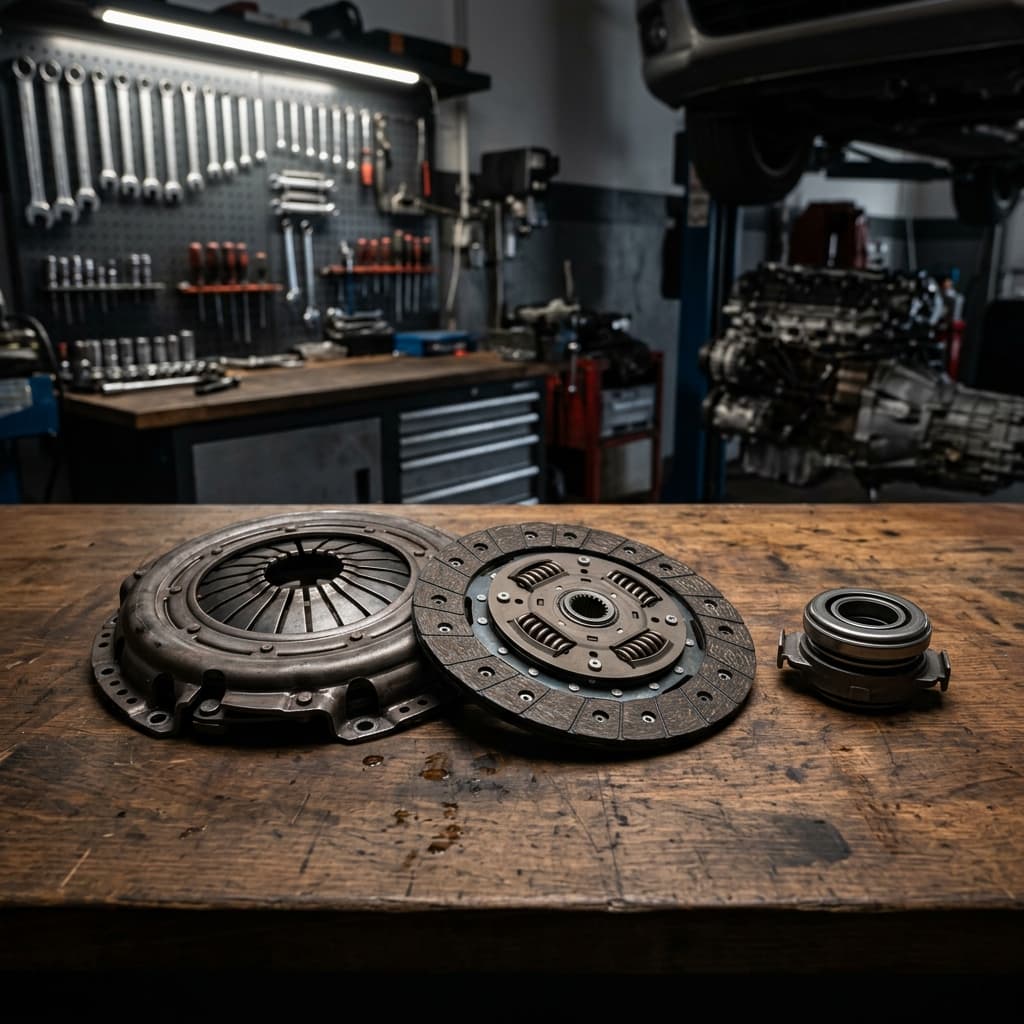
If your clutch pedal suddenly feels soft, spongy, or has less resistance than usual, something in your clutch hydraulic system or mechanical linkage has changed. While some clutches are designed to feel lighter than others, a noticeable change in pedal feel is a warning sign that shouldn't be ignored. Left unaddressed, a soft clutch pedal can progress to a pedal that drops to the floor — leaving you unable to shift gears.
How a Normal Clutch Pedal Should Feel
A healthy clutch pedal should have firm, consistent resistance through its travel. You should feel a clear engagement point where the clutch starts to grab — this is called the "friction point" or "bite point." Most drivers find this point roughly halfway through the pedal's range of motion. If the pedal feels mushy, drops to the floor, requires pumping to work, or the engagement point has moved noticeably higher or lower, something needs attention.
How Your Hydraulic Clutch System Works
Understanding the system helps you diagnose the problem. Most modern manual-transmission vehicles use a hydraulic clutch that works like this:
Clutch pedal → master cylinder → hydraulic line → slave cylinder → clutch fork → release bearing → clutch disc/pressure plate
When you press the pedal, the master cylinder pressurizes hydraulic fluid (usually DOT 3 or DOT 4 brake fluid). That pressure travels through a line to the slave cylinder, which pushes the clutch fork. The fork moves the release bearing (also called a throw-out bearing) against the pressure plate, disengaging the clutch disc from the flywheel so you can shift gears. A failure at any point in this chain changes how the pedal feels.
6 Common Causes of a Soft Clutch Pedal
1. Air in the Hydraulic System
Most modern vehicles use a hydraulic clutch system with a master cylinder and slave cylinder. If air enters the system — from a leak, during a repair, or through worn seals — it compresses instead of transmitting force, making the pedal feel spongy or inconsistent. Unlike hydraulic fluid, air is compressible, so even a small bubble reduces the system's ability to transfer your pedal input to the clutch. Bleeding the system (flushing fluid through until all air is purged) typically resolves this. Cost: $50–$100 at a shop.
2. Low Hydraulic Fluid
The clutch master cylinder reservoir should be full. Low fluid usually indicates a leak somewhere in the system — check the master cylinder, slave cylinder, and the hydraulic lines connecting them. Fluid doesn't evaporate or get "used up," so if it's low, it's going somewhere. Top it off with the correct DOT-rated brake fluid and monitor the level closely while you locate the source.
3. Failing Master or Slave Cylinder
This is the cause most people miss because it can happen without any visible external leak. Internal seals in the master or slave cylinder wear out over time, allowing fluid to bypass internally instead of building pressure. The result is a pedal that feels soft, sinks slowly to the floor when held, or requires pumping to engage. A failing master cylinder is especially common on vehicles with 80,000+ miles. Master cylinder replacement: $200–$400. Slave cylinder replacement: $150–$350 (parts and labor).
4. Worn Clutch Disc
As the clutch disc's friction material wears down, the pedal engagement point moves higher and the overall pedal feel can change. In extreme cases, the hydraulic self-adjuster can't fully compensate for the wear, and the pedal feels different — sometimes softer, sometimes with a very high or inconsistent bite point. If you notice the engagement point creeping higher combined with clutch slipping (engine revs increase without corresponding acceleration), the disc is likely worn. Full clutch replacement: $800–$1,500 depending on the vehicle.
5. Broken or Stretched Cable (Cable Clutch Systems)
Older or smaller vehicles may use a mechanical cable instead of hydraulics. Over time, the cable stretches, frays, or partially breaks — progressively reducing pedal resistance. A stretched cable makes the pedal feel loose with a vague engagement point. A fully broken cable means zero pedal resistance and no clutch function at all. Cable replacement is usually $100–$250.
6. Failing Clutch Release Bearing (Throw-Out Bearing)
The release bearing (throw-out bearing) is the component that presses against the pressure plate to disengage the clutch. When it begins to fail, you may notice a soft or inconsistent pedal feel accompanied by a whining, chirping, or grinding noise that changes when you press or release the clutch pedal. Since the release bearing is inside the transmission bell housing, replacing it typically requires removing the transmission — which is why it's almost always replaced during a full clutch job. Cost: $800–$1,500 (usually done as part of a complete clutch kit replacement).
How to Diagnose a Soft Clutch Pedal Yourself
Before heading to a shop, you can narrow down the cause with a few simple checks:
Check the fluid level and color. Open the clutch master cylinder reservoir (usually near the brake master cylinder on the firewall). The fluid should be at the "full" line and appear clear to light amber. Dark brown or black fluid is overdue for replacement and may have degraded the seals.
Look for leaks. Check under the dashboard where the master cylinder connects to the pedal for wetness or drips. Then look underneath the vehicle near the transmission for fluid on the slave cylinder or along the hydraulic line. Any wetness indicates a leak.
Test pedal behavior. Press the clutch pedal and hold it to the floor. Does it slowly sink further or creep down? That's a classic sign of a failing master or slave cylinder with bypassing seals. Does the pedal stay on the floor and not come back? The return spring may be broken, or the system has lost all hydraulic pressure. Does it come back slowly? Air in the system or a blockage in the line.
Listen for noises. Press and release the clutch with the engine running and the car in neutral. A whining or chirping that appears or disappears when the pedal is pressed points to the release bearing. Grinding suggests more serious internal damage.
Can You Still Drive with a Soft Clutch Pedal?
It depends on the severity, but you're taking a risk. If the pedal is slightly softer than normal but still engages and shifts fine, you can typically drive carefully to a shop. However, a soft clutch pedal often gets worse — sometimes suddenly. If the pedal drops to the floor while you're driving, you'll lose the ability to shift gears or come to a controlled stop in gear. Don't drive on the highway or in heavy traffic with a noticeably soft clutch. Get it inspected as soon as possible.
Soft vs. Spongy vs. No Resistance — What's the Difference?
These terms describe different symptoms with different likely causes:
- Soft pedal (less resistance than normal but still functions): Usually low fluid, minor air in the system, or early-stage cylinder wear. Often the most fixable.
- Spongy pedal (mushy, inconsistent feel with a vague engagement point): Almost always air trapped in the hydraulic system. Bleeding the system typically resolves it.
- Pedal goes to floor with no resistance: The system has lost hydraulic pressure entirely — a blown seal in the master or slave cylinder, a ruptured hydraulic line, or a completely broken cable. Do not drive. The clutch will not disengage, and you cannot safely shift gears.
Repair Costs at a Glance
| Repair | Estimated Cost |
|---|---|
| Clutch system bleeding | $50–$100 |
| Master cylinder replacement | $200–$400 |
| Slave cylinder replacement | $150–$350 |
| Clutch cable replacement | $100–$250 |
| Full clutch kit replacement (disc, pressure plate, release bearing) | $800–$1,500 |
Costs vary by vehicle make and model. Vehicles where the slave cylinder is inside the bell housing (concentric slave cylinders, common on many modern cars) will cost more because transmission removal is required.
Frequently Asked Questions
Why is my clutch pedal soft after bleeding?
If the pedal still feels soft after bleeding, there's likely still air trapped in the system — especially in lines with sharp bends or high points where air pockets collect. It can take multiple bleeding cycles to fully purge air. It's also possible the master or slave cylinder seals are worn, meaning the system can't hold pressure regardless of how well it's bled. If bleeding doesn't improve the feel after two or three attempts, suspect a failing cylinder.
Can I drive with a soft clutch pedal?
You can drive short distances carefully if the clutch still engages and shifts, but a soft clutch pedal is a progressive problem — it usually gets worse, not better. Avoid highway driving and heavy traffic. Get it inspected before it fails completely and leaves you stranded.
How much does it cost to fix a soft clutch pedal?
It depends on the cause. A simple bleed costs $50–$100. A master or slave cylinder replacement runs $150–$400. If the clutch disc itself is worn, a full clutch replacement costs $800–$1,500. The diagnostic step is key — fixing the right component the first time saves you money.
Why does my clutch pedal go to the floor?
A clutch pedal that drops to the floor and stays there has lost all hydraulic pressure. The most common causes are a blown internal seal in the master or slave cylinder, a ruptured hydraulic line, or a completely broken clutch cable. This is not safe to drive — you need a tow to a repair shop.
When to Get Professional Help
If your clutch pedal feel has changed, don't wait for it to fail completely. A soft pedal is your early warning — and catching it early often means a less expensive repair. If you're also noticing a burning smell from your clutch, that's a sign the disc is overheating in addition to having low hydraulic pressure — read that guide for more context. At Chloe's Auto Repair & Tire, our technicians diagnose clutch issues for all makes and models at any of our locations in metro Atlanta, Roswell, and Spring, TX. We'll tell you exactly what's causing the problem and give you an honest estimate before we start any work.