
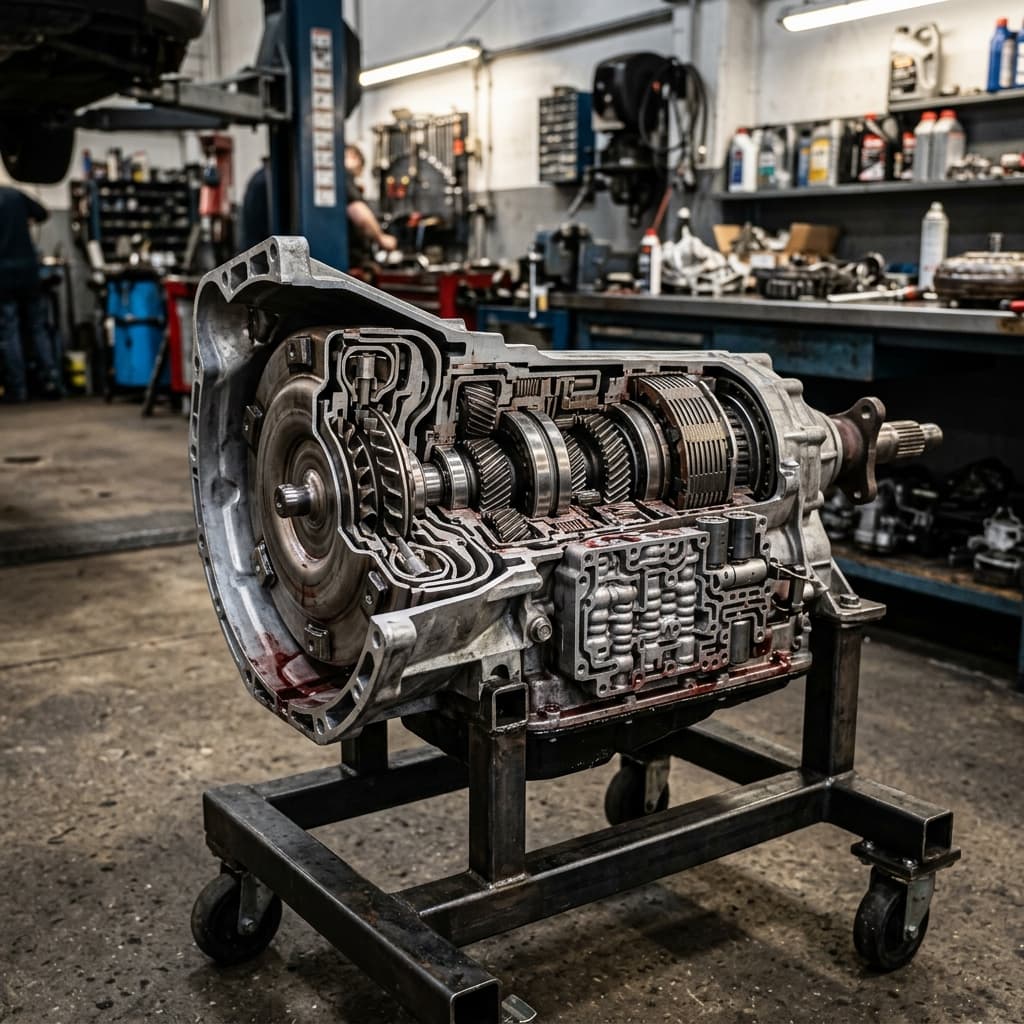
A customer pulled into our Woodstock location last week convinced her CVT was dying. "It feels like the engine is just revving without actually going anywhere," she said, gripping her keys like they'd personally betrayed her. Good news: her transmission was fine. That weird surging, rubber-band sensation is actually how CVTs are supposed to feel. But knowing the difference between normal CVT quirks and an actual failure can save you a lot of stress (and money).
Let's break down what's normal, what's not, and what you're actually looking at cost-wise if repairs are needed.
What Makes CVTs Different (And Why They Feel Weird)
A CVT, or continuously variable transmission, doesn't have fixed gears like a traditional automatic. Instead, it uses a belt or chain system with variable pulleys to create an infinite range of gear ratios. That's why acceleration feels smooth and almost elastic, like the engine is winding up without the usual gear shift "thunks" you're used to feeling.
If you've driven a Honda CR-V, Nissan Altima, Subaru Outback, or Toyota Corolla with a CVT, you've probably noticed this rubber-band effect. It's not a bug. It's the design.
Normal CVT Behavior vs Actual Problems
Here's where drivers get confused. Normal CVT feel includes:
- Engine revs climbing before the car "catches up" to speed
- A slight droning or moaning sound under hard acceleration
- Smooth, uninterrupted power delivery with no distinct gear changes
Actual problems sound and feel different:
- Shuddering or jerking, especially at low speeds around 20 to 40 mph
- A burning smell (this one's serious, don't ignore it)
- Delayed response when you press the gas, like there's a lag before anything happens
- Whining or grinding noises that get worse over time
- Warning lights on the dash related to the transmission
If your car is doing the first list, you're probably fine. If it's doing the second, it's time to get it looked at.
The Fluid Service Myth That's Costing People Their Transmissions
This is the one that gets us every time. A lot of drivers assume CVT fluid never needs to be changed, or that it's "sealed for life." That myth has led to more premature CVT failures than almost anything else we see at our shops in Kennesaw and Roswell.
CVT fluid is not the same as regular automatic transmission fluid. It's a specialized formula designed to handle the unique friction and cooling needs of the belt and pulley system. When that fluid breaks down or gets contaminated, the whole system suffers.
Most manufacturers actually recommend a CVT fluid service somewhere between 30,000 and 60,000 miles, though this varies by make and model. Skipping it doesn't mean you're saving money. It means you're setting yourself up for a much bigger bill later.
What Happens When CVT Fluid Gets Neglected
Old or degraded fluid can't properly lubricate the belt and pulleys, which leads to increased friction and heat. Over time, this causes premature wear on internal components. What could have been a simple fluid service turns into a transmission that's slipping, shuddering, or failing outright.
Repair vs Replacement: What You're Really Looking At
If your CVT is showing real problems, the next question is whether it can be repaired or if it needs full replacement.
Minor issues like sensor problems, valve body issues, or fluid contamination caught early can sometimes be repaired for a few hundred to around a thousand dollars. This is the best case scenario and part of why catching problems early matters so much.
Once you're into belt or pulley damage, or if the transmission has been run low on fluid for a while, you're often looking at a full transmission replacement. Depending on the vehicle, that can range anywhere from $3,000 to $8,000 or more. CVTs are more expensive to rebuild than traditional automatics because of their specialized parts, so replacement is often more cost effective than repair once major damage has occurred.
This is very different from a slipping automatic transmission (different repair path entirely) or issues with a manual clutch. CVTs have their own quirks, their own maintenance needs, and their own failure patterns, so it's worth getting a diagnosis specific to this transmission type rather than assuming it's the same as any other.
When To Get It Checked
If you're noticing shuddering, unusual noises, or it's just been a while since anyone looked at your transmission fluid, don't wait until it gets worse. Whether you're near our Dallas GA shop, out in Spring TX, or at any of our other locations, we can run a proper diagnostic and tell you honestly whether you're dealing with normal CVT behavior or something that needs attention.
Give us a call or book online at your nearest Chloe's Auto Repair and Tire location. We'll take a look, walk you through what we find in plain language, and help you figure out the smartest next step for your specific vehicle.