
You glance down at your dashboard and the speedometer needle is sitting at zero — even though you're clearly moving at highway speed. Or maybe it's bouncing erratically between 20 and 60 mph. Either way, driving without an accurate speedometer isn't just frustrating — it's a safety hazard that can earn you a speeding ticket you can't contest.
Why Your Speedometer Matters More Than You Think
Your speedometer does more than display your speed. In modern vehicles, the vehicle speed sensor (VSS) that feeds data to your speedometer also communicates with your transmission control module, cruise control, ABS system, and stability control. When the speed sensor fails, the ripple effect can cause erratic transmission shifting, cruise control failure, and ABS warning lights — problems that seem completely unrelated until a proper diagnosis connects them.
The Most Common Causes of Speedometer Failure
Vehicle Speed Sensor (VSS) Failure
The vehicle speed sensor is the most common culprit. Mounted on the transmission or transfer case, this sensor generates an electrical signal proportional to wheel speed. Heat, vibration, and age cause the sensor to fail — usually gradually. Early symptoms include a speedometer needle that bounces or fluctuates, followed by complete failure. The good news: VSS replacement is typically one of the more affordable speedometer repairs, and most are completed same-day.
Wiring and Connector Problems
The wiring harness between the speed sensor and the instrument cluster can develop breaks, corrosion, or loose connections. This is especially common in vehicles driven in wet or humid climates like Georgia and Texas, where moisture works its way into connectors. Intermittent speedometer problems — works sometimes, fails other times — often point to a wiring issue rather than a failed sensor.
Instrument Cluster Failure
The instrument cluster itself can fail, causing all gauges to drop to zero intermittently or the speedometer to stick at a particular reading. Modern digital clusters use circuit boards that can develop cold solder joints or failed capacitors. Older analog clusters may have worn stepper motors that drive the needles. Instrument cluster repair or replacement is more involved than a sensor swap but still a same-day repair in most cases.
Speedometer Cable (Older Vehicles)
Vehicles from the 1990s and earlier often use a mechanical speedometer cable — a flexible cable that physically spins the speedometer needle. These cables can break, kink, or disconnect from the transmission. You'll sometimes hear a squealing or chattering noise from behind the dashboard before a cable breaks completely.
How We Diagnose Speedometer Problems
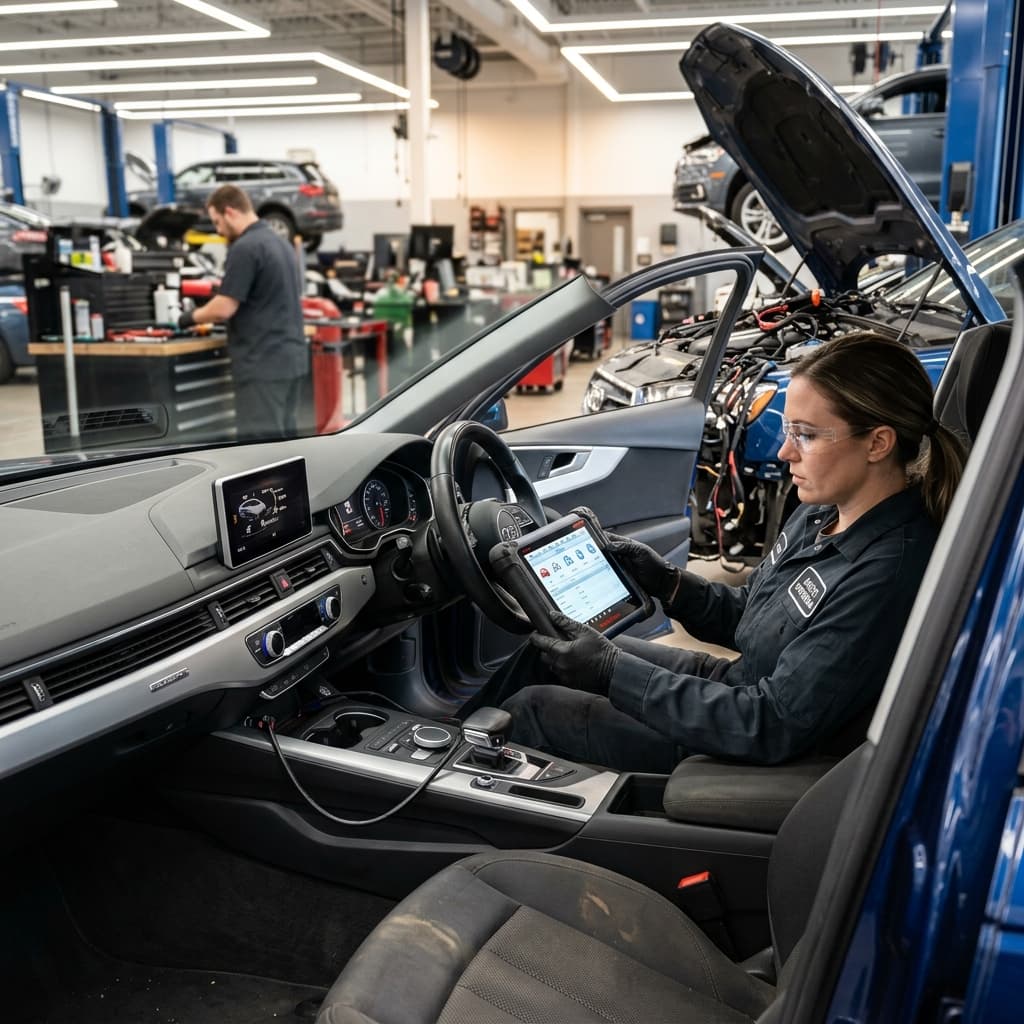
At Chloe's Auto Repair & Tire, we don't guess. Our speedometer repair process starts with a diagnostic scan for speed sensor-related codes, followed by live data analysis to see what the VSS is reporting in real time. We test the sensor's electrical output, inspect the wiring harness and connectors for corrosion or damage, and verify the instrument cluster's response. After any repair, we perform a calibration check and road test to verify accuracy.
When to See a Mechanic
- Speedometer stuck at zero while driving — likely VSS failure
- Speedometer bouncing or fluctuating — VSS or wiring issue
- All gauges dropping to zero intermittently — instrument cluster problem
- Cruise control stopped working at the same time — confirms VSS failure
- Transmission shifting erratically with speedometer issues — the VSS feeds both systems
- Odometer not tracking mileage — can affect resale value and inspection compliance
Don't ignore speedometer problems. Beyond the safety risk, a failed speed sensor can cause transmission and electrical issues that get more expensive the longer you wait.
Frequently Asked Questions
Can a bad speed sensor cause transmission problems?
Yes — and it's more common than you'd think. Your transmission relies on the vehicle speed sensor to determine when to shift gears. A faulty VSS can cause harsh shifting, delayed shifts, or the transmission staying stuck in one gear (limp mode). In many cases, fixing the $50–$150 speed sensor resolves transmission shifting complaints that look like a much bigger problem.
How much does speedometer repair cost?
Cost depends entirely on the cause. A vehicle speed sensor replacement typically runs $100–$300 including parts and labor. Wiring repairs vary based on complexity. Instrument cluster repair or replacement is the most expensive option but still far less than most people expect. We always diagnose first and give you a detailed estimate before doing any work.
Is it legal to drive with a broken speedometer?
In most states, including Georgia and Texas, driving with a non-functional speedometer is technically a violation that can result in a fix-it ticket. More practically, you can't accurately monitor your speed, which means you're more likely to get a speeding ticket — and "my speedometer was broken" isn't a valid defense.