
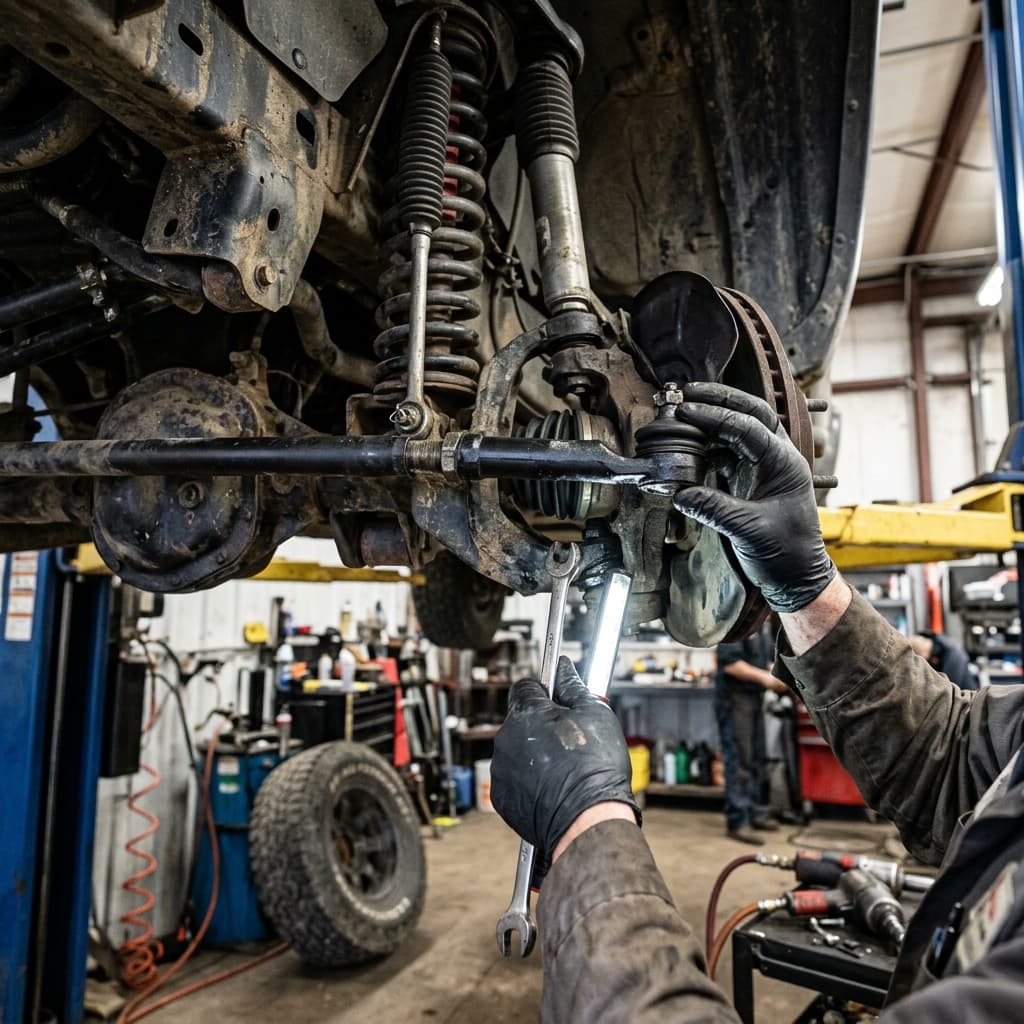
That Wheel Shouldn't Feel Like a Workout
You're pulling into a parking spot at the grocery store and suddenly your arms are doing more work than they should. The wheel feels stiff, maybe there's a groaning noise when you turn, and you're wondering if something's seriously wrong or if you're just imagining it. You're not imagining it. Hard steering is one of those problems that sneaks up gradually until one day it's impossible to ignore.
We see this a lot at our shops in Woodstock, Kennesaw, Roswell, Dallas GA, and Spring TX. The good news is that steering problems almost always point to a specific, fixable cause. The tricky part is that the fix depends on what kind of steering system your car actually has.
Two Different Systems, Two Different Problems
Not all power steering works the same way, and that matters a lot when you're diagnosing why the wheel suddenly feels like it's fighting you.
Older vehicles and a lot of trucks and SUVs still use hydraulic power steering. This system relies on fluid, a pump, and pressure to help you turn the wheel with ease. When something goes wrong here, it's usually fluid related: low fluid, a leak, a worn pump, or air that's gotten into the lines.
Newer vehicles mostly use Electric Power Steering, or EPS. Instead of fluid and a pump, EPS uses an electric motor attached to the steering column or rack. There's no fluid to check and no belt driving a pump. When EPS has an issue, it's usually electrical: a faulty motor, a bad sensor, or sometimes even a software glitch that needs a reset.
Knowing which system your car has changes the whole diagnostic approach, which is exactly why "just top off the fluid" isn't always the answer anymore.
Common Signs Something's Off
A few things tend to show up before steering fails completely, and catching them early can save you a bigger repair bill down the road.
Whining or groaning noises when turning, especially at low speeds, often points to a hydraulic pump working too hard or fluid that's low or contaminated. If you notice a burning smell along with it, that's usually fluid overheating and it needs attention soon.
Stiffness that seems worse in the morning or in cold weather can be fluid related too, especially if there's a slow leak that hasn't fully drained the reservoir yet.
For EPS equipped vehicles, a warning light on the dash (often shaped like a steering wheel with an exclamation point) is usually your first clue. Sometimes steering will feel normal one minute and heavy the next, which is a classic sign of an electric assist fault.
Play in the wheel, or a delay between turning the wheel and the car actually responding, can point to worn rack and pinion components regardless of which system you have.
Fluid, Pump, or Rack: Where the Problem Usually Lives
If you've got a hydraulic system, three components tend to cause the majority of issues.
Fluid is the most common culprit, and it's the cheapest to fix if caught early. Low fluid from a small leak, or fluid that's broken down from age and heat, can make steering feel heavy way before anything else goes wrong.
The pump is next. It's what pressurizes the fluid to give you that easy, light turning feel. Pumps wear out over time, especially with age or if the fluid hasn't been maintained. A failing pump often makes noise before it fails completely.
The steering rack (or gear box on older vehicles) is the most expensive of the three to replace, but it's also the least common cause. Wear here usually takes years to develop and often follows a period of ignored fluid or pump issues.
For EPS vehicles, the "parts" list is different: it's the electric motor, the torque sensor, and sometimes the control module. These don't leak or make grinding noises the way a hydraulic system does, so diagnosis usually means pulling codes and testing electrical components rather than checking fluid levels.
Why This Matters More Than It Seems
Steering issues affect way more than convenience. Your steering and suspension work together, and when one is off, it puts extra strain on the other. A worn steering component can accelerate tire wear, throw off alignment, and in some cases affect how your car handles in an emergency situation. This isn't a "wait a few months" kind of repair.
The good part is that steering problems are almost always diagnosable with the right tools and a good look under the hood (or a scan tool, depending on your system). We're not guessing here. We're checking fluid condition, looking for leaks, testing pump pressure, or pulling EPS codes to figure out exactly what's going on before recommending anything.
If your wheel's been feeling heavier than usual, or you've noticed any noise when turning, don't wait for it to get worse. Swing by any Chloe's Auto Repair and Tire location in Woodstock, Kennesaw, Roswell, Dallas GA, or Spring TX and we'll take a look. We'll figure out whether it's fluid, a pump, a rack, or something electrical, and get you steering easy again.