
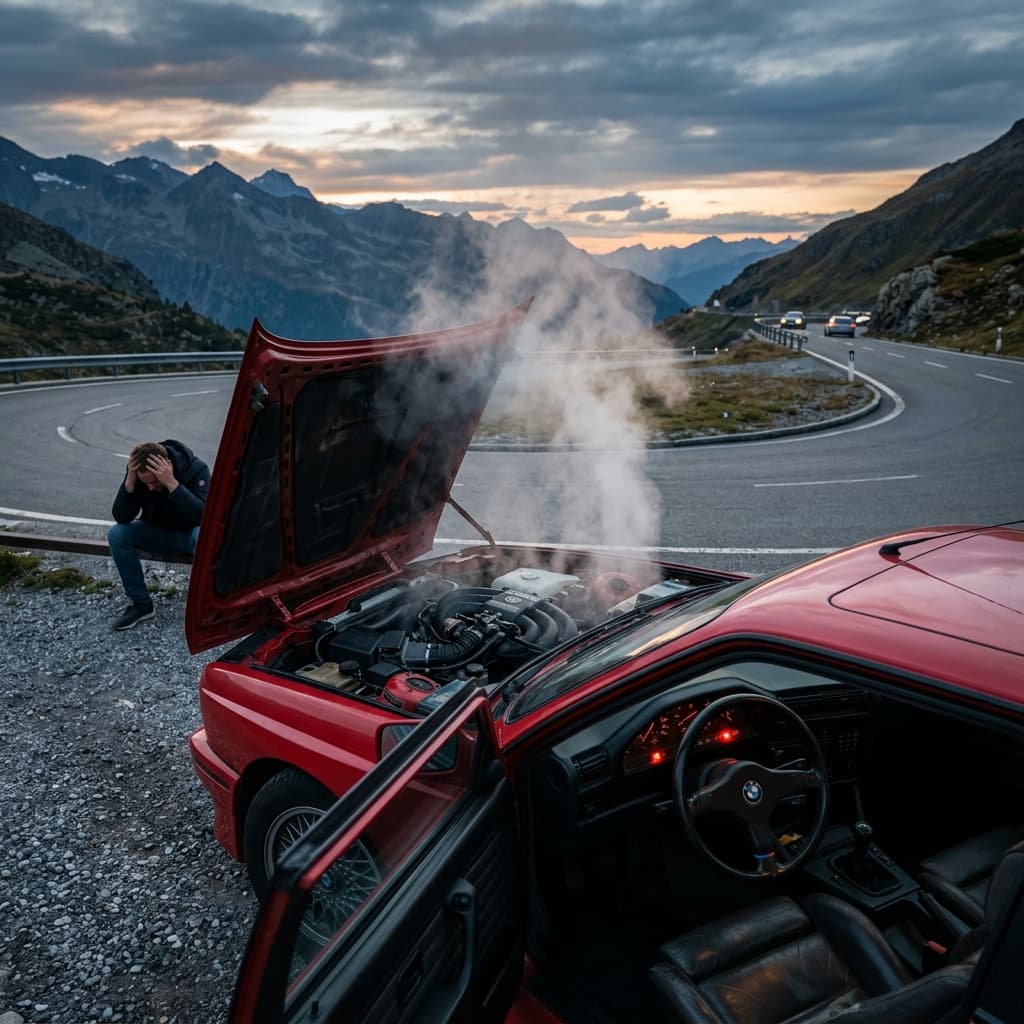
The thermostat is a small, inexpensive valve — typically $15–$40 for the part — that sits in the cooling system between the engine and the radiator. Despite its simplicity, a failing thermostat can cause overheating, poor fuel economy, a heater that stops working, and a check engine light. It fails in two modes, and each produces distinctly different symptoms.
What the Thermostat Does
The thermostat regulates coolant flow between the engine and the radiator based on temperature. When the engine is cold, the thermostat stays closed — coolant circulates only through the engine to warm up quickly. Once the coolant reaches the thermostat's rated temperature (typically 180–205°F depending on vehicle), the thermostat opens and allows coolant to flow through the radiator, where it releases heat.
This design serves two purposes: it gets the engine up to operating temperature quickly (cold engines wear faster, produce more emissions, and run less efficiently), and it maintains that temperature consistently throughout the drive.
The Two Ways a Thermostat Fails
Stuck closed: The thermostat won't open, so coolant can't flow to the radiator. The engine overheats. This is the dangerous failure mode — it can cause head gasket failure, a warped cylinder head, or a cracked block if not caught quickly.
Stuck open: The thermostat stays open, so coolant constantly flows through the radiator. The engine never reaches proper operating temperature, or reaches it very slowly. This is less immediately dangerous, but causes its own set of problems.
The 6 Symptoms of a Failing Thermostat
1. Engine overheating (stuck closed). The temperature gauge climbs above the midpoint and continues rising. If it reaches the red zone, pull over and turn the engine off — do not try to drive through overheating. A stuck-closed thermostat is an immediate failure requiring towing or very careful, short-distance driving to a shop.
2. Temperature gauge that never reaches normal (stuck open). After 10–15 minutes of normal driving, the temperature gauge should settle near the midpoint. If it never gets there, or takes 30+ minutes to reach normal, the thermostat is stuck open. The engine is running too cold.
3. Heater that blows cold air. The cabin heater uses the engine's hot coolant passing through the heater core. If the thermostat is stuck open and the coolant is too cold, the heater produces little or no heat. Cold heater on a properly warmed engine is a common thermostat complaint in winter.
4. Check engine light with code P0128. P0128 means "coolant temperature below thermostat regulating temperature" — the ECU expected the engine to be at operating temperature by a certain time and it isn't. This code is the thermostat stuck open, usually. It's one of the cleaner diagnostics: if you see P0128 with no other codes and a temperature gauge that's consistently low, the thermostat is almost certainly the cause.
5. Poor fuel economy. Engines that run below operating temperature run rich — the ECU injects extra fuel to compensate for the cold conditions. A thermostat stuck open can noticeably hurt fuel economy, especially on shorter trips where the engine never fully warms up. If your mpg has dropped and you're running cooler than usual, check the thermostat.
6. Fluctuating temperature gauge. A thermostat that's erratic — opening and closing inconsistently — causes the temperature gauge to fluctuate. The needle moves up, drops back, climbs again. This is a less common failure mode but is a clear sign the thermostat isn't operating properly.
How a Thermostat Is Diagnosed
Code scan: P0128 is usually definitive when combined with temperature gauge behavior. Clear the code, warm the engine fully, and see if the gauge reaches midpoint and stays there. If P0128 returns and the gauge shows below midpoint, the thermostat is the likely cause.
Temperature gun reading: A technician can use an infrared temperature gun to check the actual coolant temperature at the upper radiator hose. If the engine has been running 20 minutes and the upper hose is still cold, coolant isn't flowing through the radiator — the thermostat is stuck closed. If the hose is warm immediately after start, it's stuck open.
Process of elimination: A P0128 with a consistent below-normal temperature gauge, corrected by thermostat replacement, is the typical pattern. The thermostat is cheap enough that it's often replaced as a confirmed fix once the pattern is clear.
Thermostat Replacement Cost
| Component | Cost | Notes |
|---|---|---|
| Thermostat (part) | $15–$40 | Inexpensive part — most cost is labor |
| Labor | $100–$250 | Varies significantly by vehicle — some thermostats are accessible in 30 minutes; others require removing significant components |
| Total typical cost | $150–$300 | Most vehicles fall in this range at an independent shop |
| Coolant top-off/flush | $0–$175 | Often the cooling system is partially drained during thermostat access — some shops include a flush at this point |
The part itself is cheap. The labor variation is real — on some vehicles (many 4-cylinder engines), the thermostat housing is easily accessible and the job takes under an hour. On others (transversely mounted V6 engines with the thermostat deep in the block), it can take 2–3 hours. Ask your shop for an estimate before authorizing.
Can I Drive With a Bad Thermostat?
Stuck open (running cold): Yes, for a period — but you're burning more fuel, wearing the engine faster from cold running, and getting no heat in winter. It's not an emergency, but it should be addressed.
Stuck closed (overheating): No. A stuck-closed thermostat is a tow situation or an immediate shop visit with very careful monitoring of the temperature gauge. Every minute you drive an overheating engine risks head gasket damage ($1,500–$3,000) or worse. The thermostat costs $150–$300 to replace. The head gasket costs ten times that.
Our radiator and cooling service includes cooling system inspection — thermostat function, hose condition, coolant quality, and pressure testing — before recommending repair.
Frequently Asked Questions
How long does a car thermostat last?
Most thermostats are designed to last the life of the vehicle — 100,000+ miles. Premature failure is usually caused by poor coolant maintenance (acidic coolant corrodes the thermostat housing and valve), overheating episodes that stress the valve mechanism, or low-quality replacement parts. When replacing a thermostat, use an OEM or quality aftermarket unit — a cheap thermostat that fails in 2 years at a hard-to-access location is an expensive mistake.
Does a stuck-open thermostat cause overheating?
No — it causes the opposite. A stuck-open thermostat causes the engine to run too cold. A stuck-closed thermostat causes overheating by preventing coolant from flowing to the radiator. The two failure modes have opposite symptoms.
Will a bad thermostat cause the check engine light to come on?
Only the stuck-open failure mode reliably triggers a check engine light (P0128). A stuck-closed thermostat causes overheating — the temperature gauge will climb into the warning zone before a code is typically stored. Both situations warrant diagnosis, but P0128 with a below-normal temperature gauge is one of the cleaner thermostat diagnostics.