
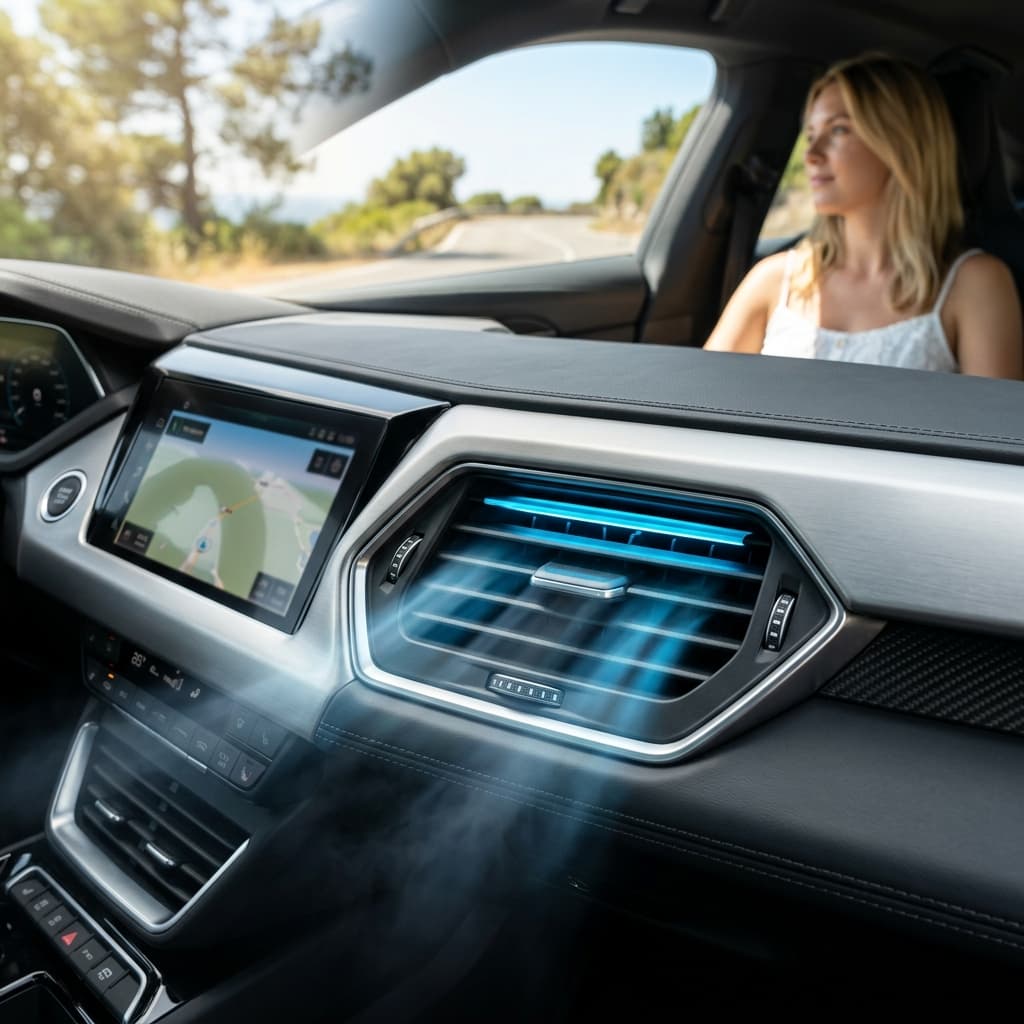
It's a cold morning, you start your car, crank the heat — and nothing but cold air comes out of the vents. You wait a few minutes, expecting it to warm up, but the heater keeps blowing cold air. This is one of the most common winter complaints drivers bring to the shop, and it almost always points to an issue with your vehicle's cooling system.
Understanding how your car's heater works will help you understand why it fails — and whether it's something you can address yourself or need a professional to diagnose.
How Your Car's Heater Works
Unlike your home furnace, your car's heater doesn't generate its own heat. It uses heat that the engine produces as a byproduct of combustion. Here's the basic process:
- The engine generates heat during normal operation, warming the coolant that circulates through the engine block
- A thermostat regulates coolant flow, keeping the engine at optimal operating temperature (typically 195–220°F)
- When you turn on the heater, hot coolant is routed through a small radiator-like component called the heater core, located inside your dashboard
- A blower fan pushes air across the heater core, warming the air before it enters the cabin through the vents
- A blend door actuator controls how much of that heated air mixes with outside air to reach your desired temperature
When any part of this system fails, you get cold air instead of warm air. Let's look at the most common causes.
Common Causes of a Car Heater Blowing Cold Air
Low Coolant Level
This is the most common cause of a heater blowing cold air. If the coolant level is low, there may not be enough hot coolant flowing through the heater core to produce warm air. Low coolant usually means there's a leak somewhere — a cracked hose, a weeping radiator, a bad water pump seal, or a leaking heater core itself. Never ignore low coolant. It's not just a comfort issue — it can lead to engine overheating and catastrophic damage.
Thermostat Stuck Open
The thermostat is a valve that stays closed while the engine warms up, then opens to allow coolant to circulate through the radiator. If the thermostat is stuck open, coolant circulates constantly and never reaches full operating temperature. The result: lukewarm coolant flowing through the heater core, which means lukewarm (or cold) air from your vents. A stuck-open thermostat also hurts fuel efficiency because the engine runs cooler than designed.
Heater Core Blockage
The heater core is a small radiator with narrow passages. Over time, rust, sediment, and mineral deposits can partially or completely clog these passages, restricting hot coolant flow. A blocked heater core produces weak heat or no heat at all. In severe cases, you may also notice a sweet smell inside the cabin (coolant leaking from the heater core) or foggy windows that won't clear.
Blend Door Actuator Failure
The blend door actuator is a small electric motor that controls a flap inside your HVAC system. This flap directs air through the heater core for hot air or bypasses it for cold air. When the actuator fails or the door gets stuck, it may lock in the cold position regardless of your temperature setting. A telltale sign is a clicking or tapping sound behind the dashboard when you change the temperature.
Air in the Cooling System
If air gets trapped in the cooling system — often after a coolant change, hose replacement, or any repair that opened the system — air pockets can prevent coolant from flowing through the heater core. The engine temperature gauge may read normal, but the heater blows cold because air, not coolant, is passing through the heater core. This is sometimes called an "airlock" and requires bleeding the cooling system to fix.
Failing Water Pump
The water pump circulates coolant through the entire system, including the heater core. A water pump with worn impeller blades can't push enough coolant volume, resulting in poor heat output even when coolant levels are correct. Other signs of a failing water pump include coolant leaks near the front of the engine and a whining or grinding noise from the pump area.
Diagnostic Steps
When your heater is blowing cold air, here's a logical diagnostic approach:
- Check the coolant level — With the engine cold, check the coolant reservoir. If it's below the minimum line, you have a leak somewhere. Top it off and monitor for loss.
- Monitor the temperature gauge — If the gauge stays below normal operating temperature after 10–15 minutes of driving, the thermostat is likely stuck open.
- Feel both heater core hoses — With the engine warm and heater on, carefully touch the two hoses going through the firewall. Both should be hot. If one is hot and one is cold, the heater core is likely clogged. If neither is hot, coolant isn't reaching the core.
- Listen for clicking behind the dashboard — A rhythmic clicking or tapping when you adjust the temperature dial points to a failed blend door actuator.
- Check for sweet smell or foggy windows — These symptoms suggest a leaking heater core.
When It's a DIY Fix vs. When You Need a Mechanic
You can likely handle these yourself:
- Topping off low coolant (but you should still find the leak source)
- Checking the temperature gauge to narrow down the problem
- Basic visual inspection of hoses and connections for obvious leaks
These require a professional:
- Thermostat replacement — Involves draining coolant and accessing the thermostat housing, which varies in difficulty by vehicle. On some models it's straightforward; on others it's buried under intake components.
- Heater core replacement — This is one of the most labor-intensive repairs in automotive work. The entire dashboard often needs to be removed to access the heater core. It's a half-day to full-day job even for experienced technicians.
- Heater core flushing — A professional cooling system flush can sometimes clear minor blockages in the heater core without replacement.
- Blend door actuator replacement — Requires dashboard disassembly and knowledge of the HVAC system to replace correctly.
- Cooling system bleeding — While some vehicles have simple bleed valves, others require specific procedures and tools to remove all trapped air.
At Chloe's Auto Repair & Tire, our technicians diagnose heater issues by testing the entire cooling and HVAC system — not just guessing at parts. We'll pinpoint the exact cause and give you options before any work begins. Learn more about our full heating and AC repair services at any of our five locations.
Frequently Asked Questions
Why does my heater only work when driving?
If your heater blows warm air while driving but turns cold at idle, the most likely cause is low coolant or a failing water pump. At higher RPMs, the water pump pushes coolant more aggressively, forcing enough through the heater core to produce some warmth. At idle, the reduced flow can't keep up. Low coolant is the first thing to check — if the level is fine, the water pump impeller may be worn.
Can a clogged heater core be flushed?
Sometimes, yes. A professional coolant flush that back-flushes the heater core can clear minor sediment and restore flow. However, if the core is severely clogged, corroded, or leaking, flushing won't help and replacement is the only permanent fix. A technician can test flow through the core to determine whether flushing is worth attempting.
How much does heater core replacement cost?
Heater core replacement cost varies significantly by vehicle because the labor involved differs dramatically. On some vehicles, the heater core is relatively accessible; on others, the entire dashboard, steering column, and HVAC housing must be removed. The heater core part itself is relatively inexpensive — it's the labor that drives the cost. Your best bet is to get a specific estimate from a trusted shop for your exact make and model.