
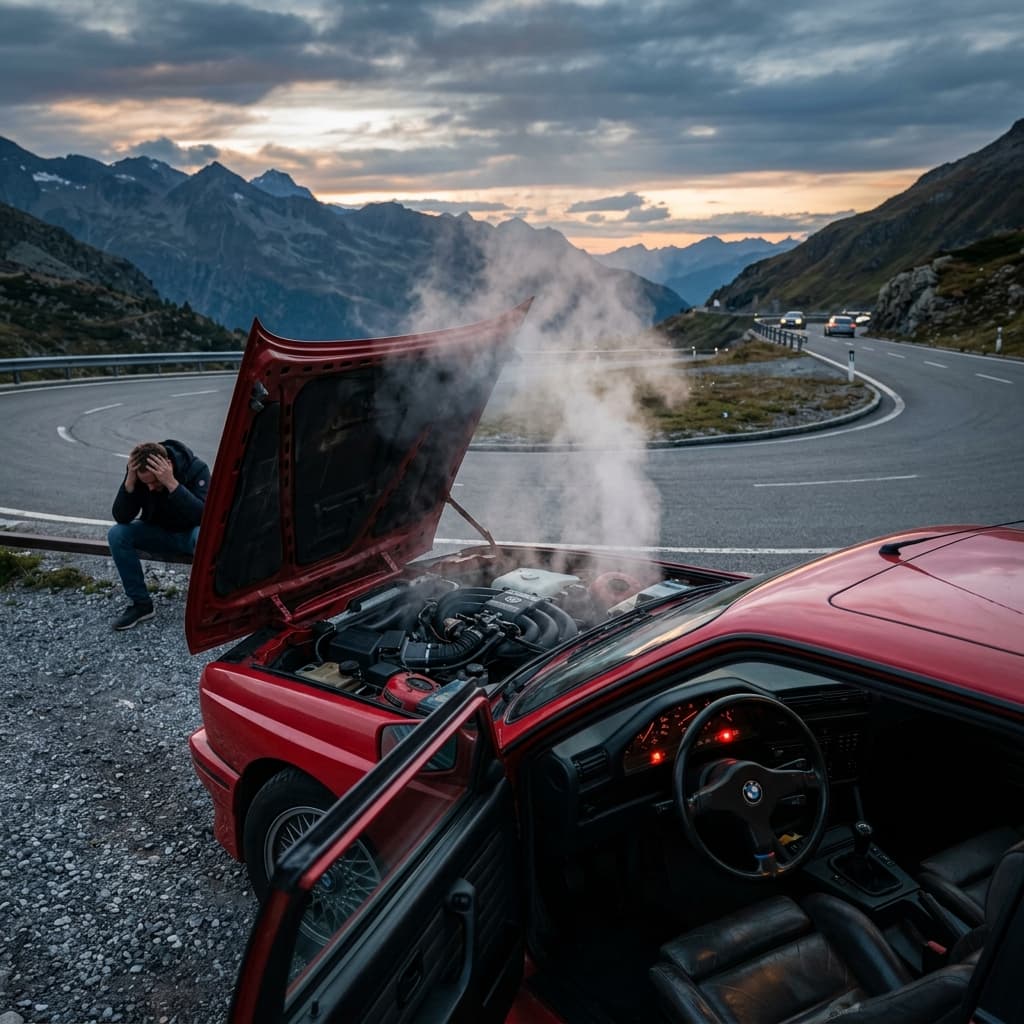
Engine overheating is one of the most serious problems your vehicle can experience. If your temperature gauge rises into the red zone, understanding the cause helps you take the right action quickly.
1. Low Coolant or Coolant Leaks
Running low on coolant is the most common cause of overheating. While coolant naturally needs to be refilled over time, an extremely low level usually indicates a leak somewhere in the system — the radiator, hoses, water pump, or heater core.
2. Bad Thermostat
The thermostat regulates your engine's temperature by controlling coolant flow. If it fails in the closed position, coolant can't circulate through the engine, causing rapid overheating. This is a relatively inexpensive fix.
3. Water Pump Failure
The water pump pressurizes and circulates coolant throughout the engine. Signs of failure include coolant leaks near the front of the engine, rust or deposits on the pump, or a rattling noise from the water pump area.
4. Radiator Problems
The radiator cools the fluid so it can safely manage the engine's temperature. A clogged, corroded, or damaged radiator can't dissipate heat effectively, causing the coolant to become too hot to cool the engine.
What to Do If Your Car Overheats
- Pull over safely and turn off the engine immediately
- Do NOT open the radiator cap while it's hot — you can be severely burned
- Wait at least 30 minutes for the engine to cool
- Check the coolant level once cool — add coolant or water if low
- If the temperature rises again after restarting, do not drive — call for a tow
Driving an overheating engine even a short distance can cause head gasket failure, warped cylinder heads, or complete engine seizure. A $200 thermostat replacement can prevent a $5,000+ engine rebuild. If the problem is a clogged or leaking radiator, our radiator repair and replacement service gets your cooling system back to spec the same day. Visit any Chloe's location if your vehicle is running hot.