
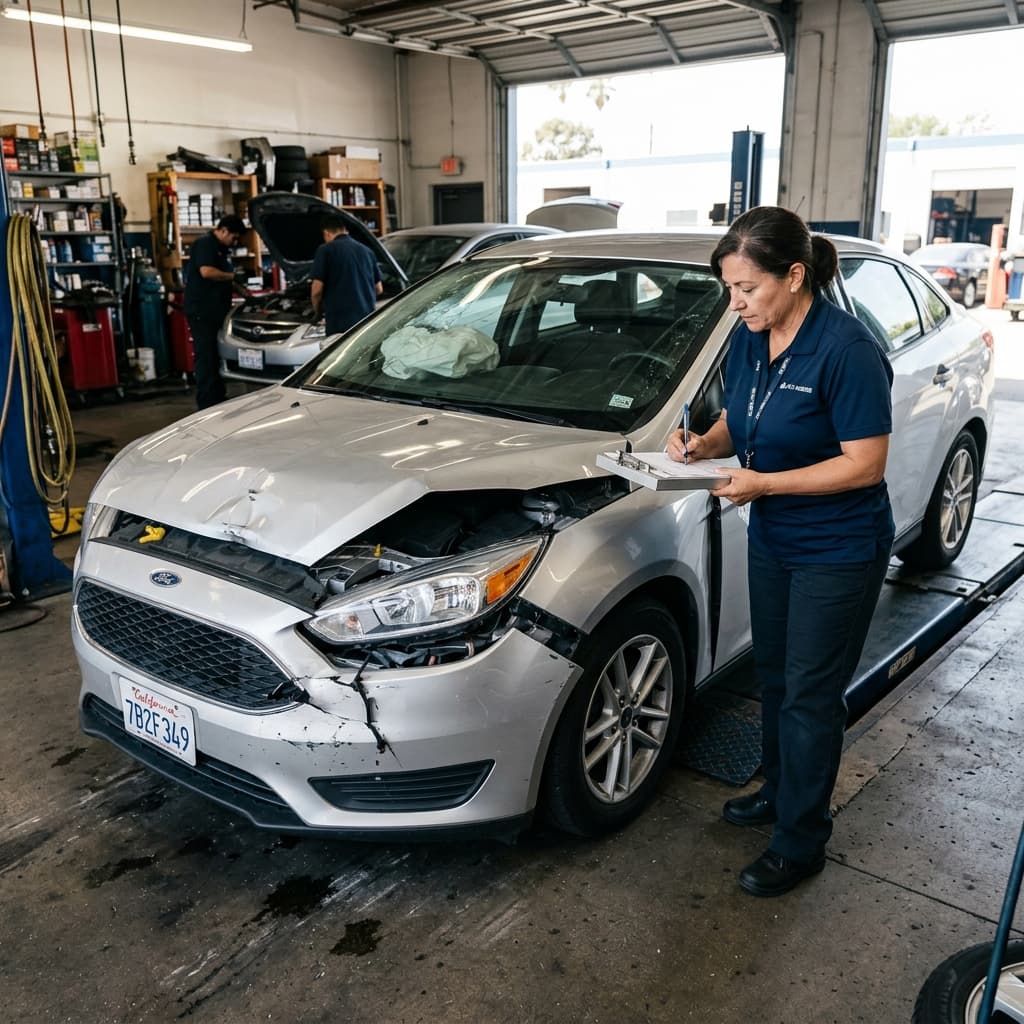
An insurance company declares a car a "total loss" when the cost of repair exceeds the vehicle's Actual Cash Value (ACV) — or meets a state-mandated threshold. "Totaled" doesn't necessarily mean the car can't be physically repaired; it means repairing it isn't financially practical.
How Insurance Companies Determine Total Loss
Insurers typically use one of two methods:
Total Loss Formula (TLF): The car is totaled if repair cost + salvage value ≥ the vehicle's ACV.
Total Loss Threshold: Many states set a percentage (commonly 70–80%) of ACV. If estimated repairs meet or exceed this percentage, the car is declared a total loss.
Common Signs Your Car May Be Totaled
Significant Frame Damage
The frame is the backbone of your vehicle. Frame damage is complex and expensive to repair, often leading to a total loss designation — especially in older vehicles.
Extensive Front-End Damage
Because the engine, transmission, and many critical systems are located in the front, severe front collisions often result in repair costs that exceed the vehicle's value.
Deployed Airbags
Replacing multiple airbags and recalibrating the associated sensors in modern vehicles can be extremely costly, sometimes pushing repair estimates past the threshold.
Major Fluid Leaks
Significant leaking of transmission fluid, oil, or coolant after an accident can indicate severe damage to critical mechanical systems.
Vehicle Age and Mileage
Older or high-mileage vehicles have lower ACV. Even moderate repair costs are more likely to exceed the value compared to a newer vehicle.
What Happens Next?
If your car is totaled, the insurance company offers a settlement based on ACV minus your deductible. You can surrender the vehicle or, in some cases, keep it and arrange repairs yourself.
If you need a pre-purchase inspection on a replacement vehicle, or if your vehicle needs post-accident assessment, visit any Chloe's Auto Repair location. We'll give you an honest evaluation.