
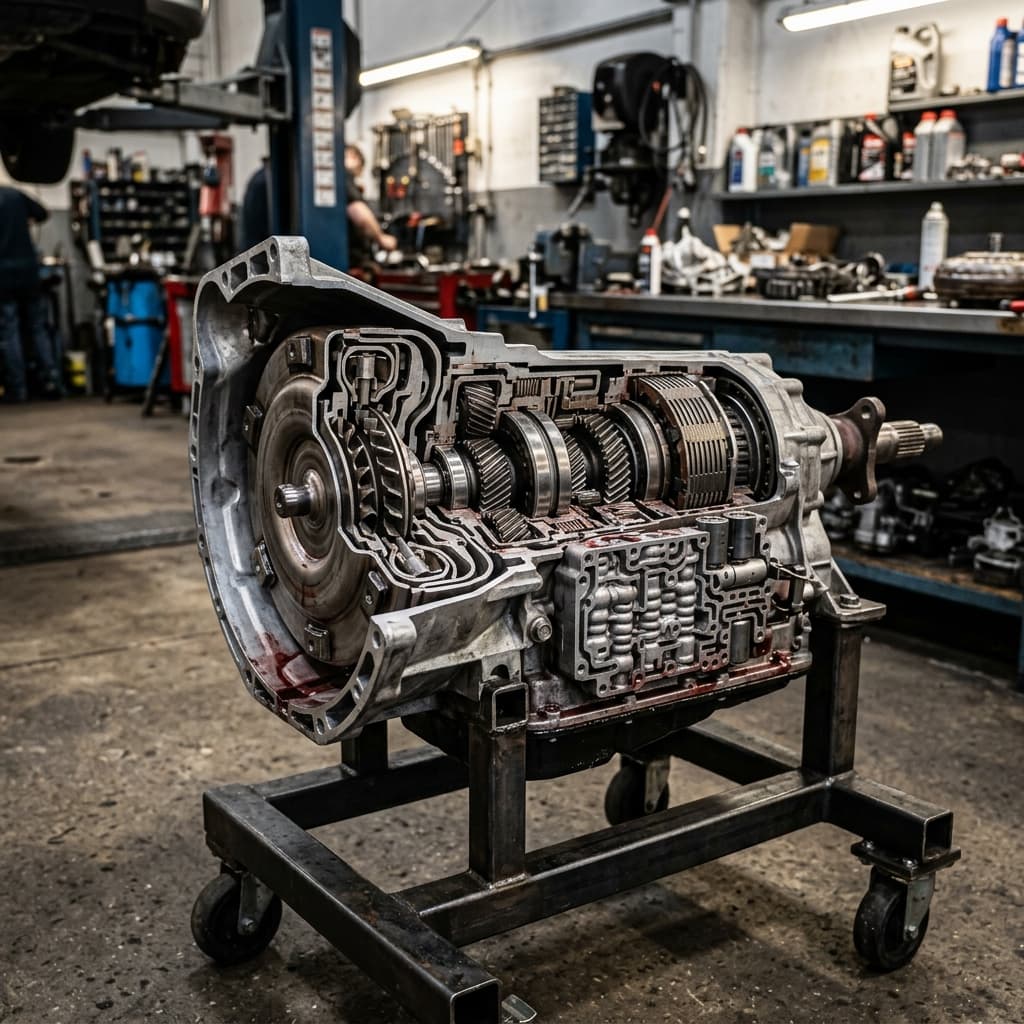
Manual transmissions are simpler than automatics in some ways and more mechanically transparent in others — which means they tend to tell you when something is wrong before it gets catastrophic. A grinding noise, a gear that won't stay engaged, or a clutch that doesn't quite feel right are all messages from the drivetrain that deserve attention. Here's how to interpret every major manual transmission warning sign, what causes each, and what it costs to fix.
If you want a deeper understanding of how a manual transmission works before diving into symptoms, read our guide on what a transmission does and how it works.
How a Manual Transmission Works (Brief Primer)
A manual transmission uses a driver-operated clutch and gear selector to change gear ratios between the engine and the wheels. Inside the gearbox, synchronizer rings (synchros) match the rotating speed of the input shaft to the target gear before engagement — preventing grinding. When synchros wear, you hear it. The system also relies on proper gear oil to lubricate every rotating component. When fluid is low or contaminated, everything suffers.
7 Warning Signs of Manual Transmission Problems
1. Grinding When Shifting
The most common manual transmission complaint. Grinding during shifts — especially into specific gears — almost always indicates worn synchronizer rings. Synchros wear down with normal use, especially if the driver tends to rush shifts or rarely double-clutches on downshifts.
Early-stage grinding (occasional, only in one or two gears) can sometimes be managed by adjusting your shifting technique. Late-stage grinding (consistent, multiple gears) means synchro replacement, which involves opening the transmission. Repair cost: $500–$1,500 depending on how many synchros need replacement and the vehicle.
2. Hard Shifting — Gear Lever Stiff or Notchy
If getting into gear requires more effort than usual, or the lever feels vague and notchy rather than precise, the causes range from simple to serious:
- Low or contaminated gear oil: The cheapest fix — a drain and refill with fresh gear oil ($50–$100) can transform shift quality on a car that's just been neglected.
- Worn shift linkage or bushings: External components that can wear and introduce slop. Usually $100–$300 to repair.
- Internal worn components: Shift forks, detent balls, or springs inside the gearbox. More involved and expensive — $400–$1,000+.
- Worn clutch that doesn't fully disengage: If the clutch isn't releasing completely, shifting will feel stiff and may grind. See clutch drag below.
3. Popping Out of Gear
The transmission spontaneously jumps out of a gear while driving — often third or fifth. This is a safety issue and should be diagnosed promptly.
Causes include worn shift forks, worn synchronizers, weak detent springs (the small springs that hold the gear selector in position), or excessive wear in the gear engagement teeth themselves. The transmission is telling you it can no longer maintain solid engagement under load. Repair cost: $600–$1,800 depending on the extent of internal wear. Continuing to drive risks being unable to select any gear.
4. Clutch Drag
Clutch drag occurs when the clutch pedal is fully depressed, but the clutch disc doesn't fully disengage from the flywheel. The result: the transmission is still partially turning when you try to select a gear, causing resistance or grinding.
Common causes include a warped or bent clutch disc, improper clutch cable or hydraulic adjustment, air in the hydraulic clutch system, or a bent input shaft. If shifting is difficult even with the clutch pedal floored and the car stationary, clutch drag is likely. Repair cost: $100–$350 for adjustment or bleeding; $800–$1,500 if the clutch disc itself needs replacement.
5. Unusual Noises in Neutral
A whining, humming, or rattling noise that's present in neutral with the clutch pedal released (engine running, car stationary) usually points to a worn input shaft bearing or a failing transmission mainshaft bearing. These bearings support the rotating shafts inside the gearbox.
An important distinction: if the noise changes or disappears when you press the clutch pedal, the culprit is more likely the clutch release bearing (throw-out bearing), which is a separate component. Either way, bearing noise means increasing wear — address it before a bearing seizes. Repair cost: $300–$800 for most bearing replacements.
6. Fluid Leaks
Manual transmissions use gear oil (typically 75W-90 or 75W-140 GL-4 or GL-5, depending on the manufacturer). Leaks most commonly originate from:
- Output shaft seal (where the driveshaft or axle exits the transmission)
- Input shaft seal (where the engine connects)
- Drain plug or fill plug (cross-threaded or with a failed washer)
- Transmission housing gasket
Check for a dark, oily residue on the ground under the transmission area. Low gear oil dramatically accelerates internal wear — a transmission that runs dry can fail in minutes. Seal replacement: $150–$400 depending on location. Ignoring it: transmission rebuild ($1,500–$3,500).
7. Vibration or Shaking During Gear Changes
A shudder or vibration when engaging a gear — particularly from a stop — that isn't clutch slipping may indicate worn transmission mounts, worn driveshaft U-joints (on rear-wheel drive vehicles), or CV axle wear (on front-wheel drive). These aren't transmission-internal issues but they feel similar. A worn transmission mount allows the entire gearbox to shift under load, causing vibration and sometimes a clunk. Mount replacement: $150–$350. U-joint or CV axle service: $200–$500.
Transmission Fluid: The Most Overlooked Maintenance Item
Many drivers don't know that manual transmissions require periodic gear oil changes. Unlike automatics, manuals don't have a filter, but the gear oil still degrades, picks up metal particles from normal wear, and eventually loses its protective properties. Most manufacturers recommend a gear oil change every 30,000–60,000 miles.
Fresh gear oil is cheap insurance. A $50–$100 fluid service can noticeably improve shift feel and extend transmission life significantly.
When to Seek Professional Help
Any change in how your transmission shifts, sounds, or feels deserves professional diagnosis — and sooner is always cheaper. A synchro replacement addressed early is $600. The same transmission left until it's grinding metal into the gear oil can require a full rebuild at $1,500–$3,500.
At Chloe's Auto Repair & Tire, manual transmission repair is a specialty. Our technicians diagnose and repair manual gearboxes for all makes and models across our five locations. We'll tell you exactly what we find and give you a written estimate before any work begins.
Frequently Asked Questions
Why does my manual transmission grind when I shift?
Almost always worn synchronizer rings (synchros). These small brass or carbon rings match shaft and gear speeds before engagement. When worn, gears clash briefly during the shift — creating that grinding sensation and noise. Early-stage wear grinds only in one or two gears; late-stage grinds in most gears. Repair involves opening the transmission and replacing the affected synchros ($500–$1,500).
Is it safe to drive with a manual transmission that pops out of gear?
No — this is a safety issue. If the transmission jumps out of gear under load (especially at highway speed), you lose engine braking and power delivery unexpectedly. Get it diagnosed promptly. Continued driving will accelerate internal damage and could leave you unable to select any gear.
How much does manual transmission repair cost?
It depends heavily on what failed. Minor repairs (seals, fluid, linkage): $100–$400. Synchro replacement: $500–$1,500. Full rebuild: $1,500–$3,500. Complete replacement with a remanufactured unit: $2,000–$4,000 including labor.
How often should I change manual transmission fluid?
Every 30,000–60,000 miles, or per your owner's manual. Many drivers skip this entirely, which leads to accelerated synchro wear and rough shifting. A drain and refill typically costs $50–$100 in parts and an hour of labor.
What's the difference between clutch drag and a worn clutch?
A worn clutch slips — the disc can't grip the flywheel firmly, so the engine revs without proportional vehicle acceleration. Clutch drag is the opposite — the disc doesn't release fully when the pedal is depressed, making it hard to select gears. Both are clutch problems, but with opposite symptoms and sometimes different causes.